

AI instant quoting for print: data model, approval rules and accuracy testing
An AI print-quoting engine needs a data model covering every price-driving product and option attribute, real cost and margin inputs, and order history; an approval-rule matrix that decides which quotes it may issue unattended and which must go to a person; and an accuracy test against real historical quotes before launch, repeated on a cadence after.
Book a solution review See the related solutionBy Huy Nguyen (David), Founder & CEO · Updated · 10 min read

This guide is for a web-to-print platform owner or product lead scoping an AI-assisted quote engine, and for an operations or prepress lead who currently quotes complex jobs by hand and wants to know what is safe to automate first. It assumes the platform itself is already decided; the platform guide and the implementation checklist cover that choice, and our e-commerce development team builds the quoting layer itself.
In this guide
- The quoting data model: what the engine needs to see
- Approval rules: what an AI quote may issue, and what it must escalate
- Testing quote accuracy before and after launch
- Where AI fits in print quoting
- What delivery record exists, and what does not
- Alternatives: who builds the quoting layer
- Limits of this guide
- Frequently asked questions
- Next step
The quoting data model: what the engine needs to see
Most web-to-print catalogs already model quantity-break, option-based pricing well enough for a human to read a price off a table. An AI quoting engine needs more than the catalog: it needs the inputs that let a model (or a well-tuned rules engine) price a configuration the catalog table does not spell out, and it needs to know when a price is reliable enough to show without a person checking it.
-
Product and option attributes
- What it holds
- Substrate, size, colours, finishing, quantity breaks, turnaround tier
- Why the engine needs it
- The same fields a human quoter reads first; without them the model guesses
-
Cost inputs
- What it holds
- Material, press/machine time, labour and finishing cost per unit at each quantity
- Why the engine needs it
- Separates price from cost, so the engine can hold a margin floor instead of only matching a competitor's number
-
Margin floor and rules
- What it holds
- Minimum acceptable margin by product line, channel or account
- Why the engine needs it
- The line between a quote the engine may issue and one that needs a human's judgement call
-
Customer and account context
- What it holds
- New vs. repeat buyer, contract or negotiated pricing, order history, account credit standing
- Why the engine needs it
- A contract price or a repeat buyer's usual order looks different from a one-off request from an unknown account
-
Historical order and quote outcomes
- What it holds
- Past quotes, what was actually produced, win/loss and any manual price override
- Why the engine needs it
- The holdout set a new model or rule change is tested against, and the record that shows when a human already overrode the catalog price
A platform that only feeds the engine a product and option list, the way a storefront catalog usually looks, can price a standard job but has nothing to decide a margin floor or recognise a contract account; it will under- or over-price the jobs that do not look like the catalog's common case.
Approval rules: what an AI quote may issue, and what it must escalate
Treat this the same way the artwork preflight guide treats a file check: every quote gets a rule, not a blanket "AI quotes, humans don't." The rule depends on how far the configuration sits from what the engine was built and tested on, not on how complex the job looks to a buyer.
| Rule | Trigger | Why | Example |
|---|---|---|---|
| Auto-issue | Known product/option combination, quantity inside the trained or tested range, margin at or above floor, no contract pricing involved | The engine has evidence it prices this combination correctly | A repeat sticker order at a standard size and a quantity the model has priced hundreds of times |
| Hold for review | New product/option combination, quantity outside the tested range, or margin within a narrow band of the floor | The engine's confidence is lowest exactly where the training data is thinnest | A first-time run of a new substrate, or a quantity ten times larger than anything in the holdout set |
| Always escalate | Contract or negotiated account pricing, a margin-floor breach, a rush surcharge stacked on a volume discount, or any price an operator previously overrode for this account | These are judgement calls a model should not make unsupervised, and a wrong one is expensive to reverse once a buyer has accepted it | A corporate account with a negotiated rate asks for a one-off rush job outside its contract terms |
NIST's AI Risk Management Framework states the general principle this table applies: human oversight needs differ by system, autonomous decisions suit only the configurations an organisation has evidence for, and the roles and escalation paths need to be defined and documented, not assumed. For a quoting engine, "defined and documented" means the rule table above, reviewed whenever the product catalog, cost base or margin policy changes.
Testing quote accuracy before and after launch
-
Build a holdout set from real historical quotes
Pull a sample of past staff-quoted (or catalog-priced) orders the engine was not trained or tuned on, covering standard jobs and the edge cases from the escalation table.
-
Set a tolerance band, not a single pass/fail price
Define how far a generated quote may sit from the historical price (as a percentage or an absolute amount) before it counts as a miss, agreed with whoever owns margin.
-
Run the engine in shadow mode before it quotes a real buyer
Google's machine learning guidance calls this a "dark launch": the new engine prices every incoming request alongside the current process, its price is logged but never shown to a buyer, and a team compares the two before any quote reaches a customer.
-
Score accuracy and the approval rules together
A high percentage of in-tolerance prices is not enough if the engine also auto-issued a quote the rule table says should have escalated; audit both numbers from the same test run.
-
Pilot one product family live, with a human checking every auto-issued quote for a fixed period
The same staged-rollout discipline the implementation checklist applies to a platform launch applies to a pricing model.
-
Monitor on a cadence after launch, not only at launch
Re-run the holdout comparison whenever cost, substrate or margin policy changes, and set a review date even if nothing has obviously changed, since catalog and cost data drift over time.
Where AI fits in print quoting
The pricing and data-structure layer this guide describes is rule-based and deterministic; AI's place is forecasting a price from that data and then only within the approval rules above. Netbase works with the major commercial and open-source AI models, chosen per project. Each item below states how mature it is at Netbase.
-
In delivered work
Product recommendation engine
Built for 4over4's online printing store from browsing and purchase history; it does not generate or approve a price and is not a quoting tool.
-
Available capability
AI-assisted print quoting and accuracy testing
Forecasting a price from historical cost and order data, and the holdout, shadow-testing and monitoring practice this guide describes, are machine learning and responsible-AI/MLOps features; not yet tied to a published quoting case.
What delivery record exists, and what does not
Netbase has delivered 50+ custom web-to-print platforms across apparel, packaging, signage, promotional merchandise and corporate B2B portals, and print pricing options are among the delivered configurator features on client print stores. For ACT Printing, Netbase built quantity-tier pricing and contextual upsells with a live grand total across garment, colour and size selections, plus structured order data for staff: a rule-based pricing and data-structure layer, not an AI-generated price, and the clearest public example of what this guide's data model builds on. Printcart, a Netbase Business Division, runs the same kind of rule-based product setup and ordering inside a merchant's own store.
What does not exist. No published Netbase record describes an AI model generating a print quote or deciding, on its own, whether a quote may be auto-issued. The approval-rule matrix and testing method above come from general machine learning launch and oversight practice (Google's Rules of Machine Learning, NIST's AI Risk Management Framework) applied to the pricing data Netbase has built, not from a measured Netbase quoting project. No accuracy percentage, turnaround-time saving or win-rate figure is claimed for an AI-generated quote.
Alternatives: who builds the quoting layer
| Route | Strength | Risk | Choose it when |
|---|---|---|---|
| Rules-based pricing engine only | Deterministic, easy to audit and explain to a buyer | Cannot price a configuration outside its rule set without a manual quote | Your catalog's combinations are well defined and change rarely |
| Buy a vendor's AI quoting product | Fast to switch on; the vendor owns model upkeep | Some vendors market instant AI quotes without publishing an evaluation method; GelatoConnect's AI Estimator page, for example, describes the tool's speed and outcomes but not a published accuracy-testing method | You want to compare quoting speed quickly and can accept a vendor's black-box pricing logic |
| Custom rules engine plus a quoting model | Keeps the approval-rule matrix and holdout testing under your own governance | More engineering and data work up front | Your pricing logic, margin rules or account contracts are too specific for an off-the-shelf tool |
In Netbase custom development the client owns the IP created for it. Most Netbase projects are delivered on fixed-price contracts agreed after discovery; a quoting engine is typically scoped the same way as the rest of a web-to-print platform build, for printing and packaging businesses.
Limits of this guide
- No Netbase project has published an AI-generated or AI-approved print quote as delivered scope; the data model and approval-rule matrix are a design framework, not a report on a measured system.
- Cost, margin and account data vary by business; the categories above are a checklist to adapt, not a fixed schema.
- The testing steps assume enough historical quote volume to build a meaningful holdout set; a very new or low-volume catalog needs a longer shadow-testing period before the holdout comparison is reliable.
Plan the next step with a Netbase consultant
Frequently asked questions
No. The margin floor is a business decision made by whoever owns pricing; the model or rules engine checks a generated price against that floor and escalates if it would fall below it.
Enough past quotes to cover the common product/option combinations and the edge cases in the escalation table; a thin holdout set makes a tolerance-band pass look safer than it is, so widen the shadow-testing period rather than trusting a small sample.
Yes. Log the data inputs, the rule that allowed auto-issue and the final price for every quote, the same way an order's production data is kept; it is what makes the next accuracy test and any dispute reviewable.
No. Preflight decides whether an uploaded file is safe to print; this guide decides whether a price is safe to show. Both use the same auto-issue/hold/escalate shape because both put a bounded AI decision in front of a human only where the data supports it.
Next step
Tell us what your current quoting process gets wrong first, and we will book a solution review to scope the data model and approval rules for your catalog. You can also see the web-to-print platform solution.
Work behind this guide
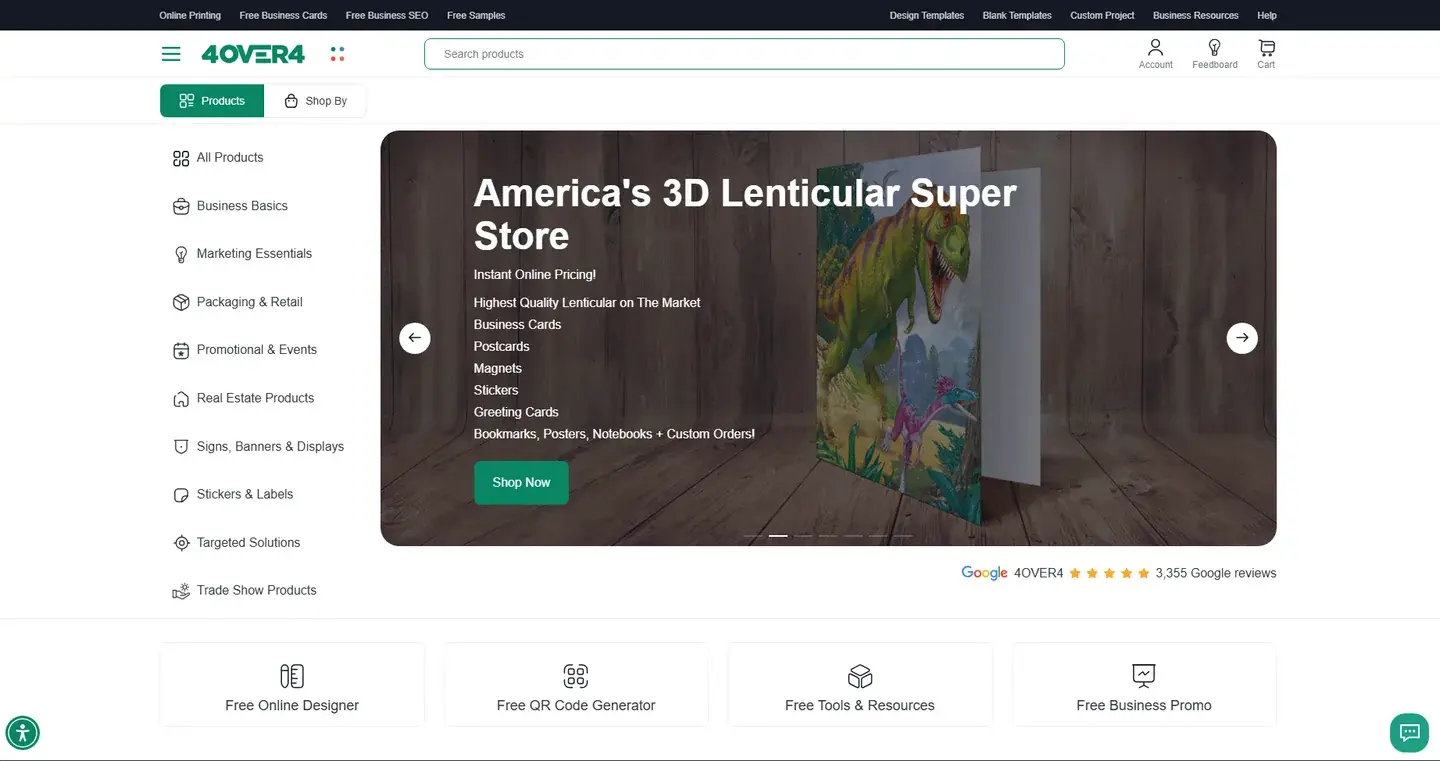
Netbase JSC worked remotely to rework checkout, search and navigation, automate Adobe Illustrator (.ai) to SVG file conversion and add recommendations.
Keep Reading
Netbase delivered the guided ordering flow remotely through its CMSmart and Printcart divisions, so every order reaches production as structured data with its artwork.
Keep ReadingRelated services and solutions
 AI-enabled ecommerce development for merchants who outgrew templates
Netbase provides custom ecommerce development for merchants that have outgrown templates, to turn traffic into orders with less manual work, using AI for search, recommendations and catalog work where it pays. We build on WooCommerce, Magento 2, Laravel and headless stacks; 4over4, whose store gained an AI recommendation engine, reported 82% more revenue within six months.
Learn More
 Web-to-print platform with AI design assistance, from online design to a print-ready order
A web-to-print platform is an online ordering, design and prepress workflow that helps print businesses sell custom products: customers configure, design and approve their order online, AI can suggest layouts and catch artwork problems, and production receives a print-ready file. Netbase has delivered 50+ custom web-to-print platforms across apparel, packaging, signage, promotional merchandise and corporate B2B portals.
Learn More
Work with Netbase remotely
Every Netbase engagement is delivered remotely, so clients in any country and any industry can work with us; Netbase has worked with clients in 80 countries. Contracts and invoices are issued by Netbase JSC, and payment is made by bank transfer to Netbase JSC's company account or PayPal Business. Talk to the CEO, Huy Nguyen (David), on WhatsApp or by email.
Discuss a project
Netbase JSC helps organizations design, build, modernize, and operate digital products and AI-enabled business systems.project@netbasejsc.com
+84 937 869 689
91 Nguyen Chi Thanh, Dong Da, Hanoi, Vietnam
Get in touch
Tell us what you want to build, modernize, or operate.