

Marketplace platform options: SaaS builder, enterprise suite or custom build
A hosted SaaS marketplace builder launches fastest but caps how far you can change vendor onboarding, catalog and payouts; a self-hosted open-source suite or a fully custom build cost more engineering time up front but remove that ceiling. Score vendor-model complexity, integration needs and how much platform ownership you actually want before you shortlist a vendor name.
Book a solution review See the marketplace development solutionBy Huy Nguyen (David), Founder & CEO · Updated 11 Oct 2026 · 11 min read

This guide is for founders and product owners scoping a new multi-vendor marketplace, and for CTOs deciding whether to turn an existing single-seller store into one. It assumes the architecture itself — vendor onboarding, catalog, payment splits, payouts, order routing — is already understood; for that, see the marketplace platform architecture guide. This page answers the question that comes before architecture: which platform model should carry it, and the e-commerce marketplace development solution is where to start once you have an answer.
In this guide
- Three ways to run a marketplace platform
- The decision matrix
- How to run this decision
- Where AI fits
- What delivery record exists, and what does not
- Alternatives: when each model wins
- Limits of this guide
- Frequently asked questions
- Next step
Three ways to run a marketplace platform
Public marketplace-software coverage mostly ranks named products; it rarely separates the three platform models a buyer is actually choosing between.
- Hosted SaaS marketplace builder. A vendor runs the infrastructure and ships pre-built vendor onboarding, catalog, checkout and payout flows on a subscription; you configure, you do not own the platform code. Sharetribe's own comparison of marketplace software frames this model around fast, no-code or low-code launch (Sharetribe, "Best marketplace software in 2026", accessed 2026-10-11).
- Self-hosted or open-source enterprise suite. A licensed or open-source marketplace or commerce platform — CS-Cart's multi-vendor product and Laravel-based options such as Bagisto are typical examples — runs on infrastructure you control, with deeper customization than a SaaS builder but ongoing ownership of hosting, upgrades and security on your side (CS-Cart, "Best Marketplace Platform: Top 17 Marketplace Software", accessed 2026-10-11; Virto Commerce, "Best Multi-Vendor Marketplace Software (2026)", accessed 2026-10-11).
- Fully custom build. A bespoke backend and data model built for your vendor, catalog and payout rules specifically, with no template ceiling but the longest time to a first transaction and the full integration burden on your own team (Yo-Kart, "Marketplace Software vs Custom Build: What's the Better Choice in 2026?", accessed 2026-10-11; a 2026 founder blog on custom development versus SaaS builders makes the same build-for-scale argument, accessed 2026-10-11).
None of these is "better" in the abstract; each trades launch speed against platform ownership differently, and the right trade depends on what your marketplace needs to do.
The decision matrix
Score your own marketplace against each row before you shortlist a vendor or a framework.
| Criterion | Hosted SaaS builder | Self-hosted / open-source suite | Fully custom build |
|---|---|---|---|
| Vendor onboarding complexity | Fits simple, templated onboarding | Fits moderate rules you can configure or extend | Fits onboarding rules unique to your category or region |
| Catalog and search depth | Limited to the builder's data model | Extensible, bounded by the suite's architecture | Unbounded, built to your catalog exactly |
| Payment and payout logic | Built in, limited to the provider's split rules | Configurable, often via a payments module you own | Built to your commission, currency and hold-period rules |
| ERP, CRM or PIM integration | Narrow, usually app-store connectors | Broader, via the suite's API or extensions | Whatever you build, at full integration cost |
| Data and IP ownership | Platform code and infrastructure stay the vendor's | Your infrastructure; licence terms still apply to the suite's code | Your code, your infrastructure, your IP throughout |
| Extensibility ceiling | Lowest; template and app-store bound | Medium; bounded by the suite's own architecture | Highest; bounded only by your engineering budget |
| Typical time to first transaction | Weeks | Months | Longest: months to over a year |
| Who owns hosting, upgrades and security | The SaaS vendor | You, on top of the suite's own release cycle | You, entirely |
Public comparisons report hosted SaaS builders launching in roughly 2-8 weeks against 6-18 months or more for a custom build, with self-hosted suites landing in the 3-12 month range between them (Chetu, "Custom-Built vs SaaS E-Commerce Platforms: Which is Better?", accessed 2026-10-11; Sharetribe, "Six ways to build a marketplace platform", accessed 2026-10-11). Treat these as ranges to sanity-check a quote against, not a guarantee: your own onboarding and integration rows move the real number more than the category does.
How to run this decision
-
Map your own vendor-onboarding and catalog complexity first
, before looking at any vendor or framework, so the model you need is not anchored to whoever pitched first.
-
List every system the marketplace must integrate with
ERP, CRM, PIM, a payments provider, a tax or reporting requirement — and check each option's row in the matrix against that list.
-
Decide the ownership boundary you actually want
are you willing to own hosting, security and upgrades for a lower template ceiling, or do you want a vendor to carry that in exchange for less customization?
-
Pilot on the lightest model that could plausibly work
, even if you expect to outgrow it, rather than committing to the most flexible option before you know your real vendor and catalog shape.
-
Re-score after the pilot
A vendor-onboarding flow or a payout rule that looked simple on paper often reveals its real complexity only once vendors start using it.
Where AI fits
AI search, ranking, seller-listing moderation and fraud signals are additive to every one of the three models; they change what you build on top of the platform, not which platform model you start from. Treat them as a growth capability layered onto the catalog and vendor-review flow the chosen platform model already provides (F028, F070), not as a reason to pick one model over another.
-
In delivered work
AI content moderation on a marketplace
For a bilingual classifieds marketplace (client not named), Netbase delivered AI-powered content filtering that flags offensive listings into an admin moderation dashboard, alongside paid ad posting, ratings and messaging, on a fully custom Laravel build.
-
Available capability
AI tooling across platform models
Netbase works with the major commercial and open-source AI tools and models, chosen per project, rather than one vendor's fixed feature set (F070); a self-hosted suite or a custom build can add AI where you need it, not yet tied to a published case on every model.
What delivery record exists, and what does not
Netbase has delivered on two of the three models above and names the gap rather than claiming experience it does not have.
- Self-hosted, open-source suite. Netbase built RB Marketplace, an English-first multi-vendor marketplace for beauty, electronics and more, on a self-hosted, open-source marketplace platform: vendor registration with admin approval, store profiles, commission deductions and payout requests, plus a customer shopping app built on the same API, with push alerts for orders and deals.
- Fully custom build. For an anonymous EU fashion-tech aggregator moving from direct sales to a multi-vendor model, Netbase rebuilt vendor-onboarding and catalog flows on a custom platform, growing GMV 47% and cutting vendor onboarding time 60% within six months of launch. The same custom-build model delivered the classifieds marketplace above, built from a blank Laravel backend with its own payments and moderation integration.
- Adjacent model: open-source commerce platform plus a multi-vendor module. For a Dubai-based loyalty and rewards company (not named, NDA-bound), Netbase delivered a headless, multi-store reward shop on Magento 2 Open Source with a multi-vendor fulfilment-routing module and a Next.js front end — the enterprise-suite model extended with a headless layer. See the loyalty reward shop portfolio record.
- Commerce platform breadth. Beyond these cases, Netbase has delivered on WooCommerce, Magento 2, Laravel and headless commerce, with a wider stack that includes CS-Cart (F026) — the same open-source family this guide's "enterprise suite" category draws its examples from.
- Commercial model. Most Netbase engagements run on fixed-price contracts after discovery (F067); typical e-commerce build timelines run one to three months for a small build to six months or more enterprise-scale (F023), inside the range the public sources above report.
What does not exist. Netbase publishes no delivery record on a hosted SaaS marketplace builder (a Sharetribe- or Arcadier-style product): every registered marketplace build above is self-hosted or fully custom. No price, rate or guaranteed timeline is published for any model, and no benchmark compares Netbase's own delivery time across the three models.
Alternatives: when each model wins
| Route | Strength | Choose it when |
|---|---|---|
| Hosted SaaS builder | Fastest launch, lowest up-front engineering cost, vendor carries hosting and security | Vendor onboarding and catalog rules are simple and templated, and time to first transaction matters more than customization depth |
| Self-hosted / open-source suite | Deeper customization than a SaaS builder, infrastructure you control, a large plugin or extension ecosystem | Requirements exceed a SaaS builder's template but do not justify a fully bespoke backend |
| Fully custom build | No template ceiling; built to your vendor, catalog and payout rules exactly | Vendor onboarding, catalog or payout logic is specific enough that no existing product fits it, and you can carry the integration and ownership cost |
| SaaS builder now, replatform later | Validates demand before committing engineering budget | You are not yet certain vendors and shoppers will use the marketplace at all |
Netbase builds the self-hosted/open-source-suite and fully-custom ends of this table through the e-commerce marketplace development solution; payment-split and payout design for whichever model you pick is covered separately in marketplace payouts, commissions and settlement, and whether your chosen platform is ready for AI shopping agents to transact against it is a further, later decision covered in agentic commerce readiness.
Limits of this guide
- The SERP sample used one search engine, one locale, at snippet level, accessed 2026-10-11; re-verify a named platform's current features or timelines before relying on them.
- No price, rate or guaranteed timeline is published for any Netbase engagement; the ranges above are either third-party figures (their own source and access date) or Netbase's general delivery-timeline fact (F023), not a quote for a specific build.
- This guide does not claim Netbase delivery experience on a hosted SaaS marketplace builder; weight that row as researched, not as a Netbase delivery record.
- For "custom vs off-the-shelf" beyond marketplaces, see the custom e-commerce platform guide; this page does not repeat that reasoning.
Plan the next step with a Netbase consultant
Frequently asked questions
Yes, but plan the migration cost in from the start: vendor accounts, catalog data, order history and payout records all have to move, and the new platform must reach feature parity before cutover. Treat a SaaS builder as a validated starting point, not a permanent decision, if your model is likely to outgrow its templates.
It removes the hosting and subscription lock-in of a SaaS builder, but a licence or an open-source project's own release cycle, plugin ecosystem and upgrade path still shape what you can change and when. Read the licence terms and the project's own extension model before assuming "open-source" means fully unconstrained.
Published figures put a hosted SaaS builder at roughly 2-8 weeks, a self-hosted suite at 3-12 months, and a custom build at 6-18 months or more (Chetu, accessed 2026-10-11; Sharetribe, accessed 2026-10-11); Netbase's own typical build timelines (F023) sit inside that same range.
Largely, yes. A hosted SaaS builder keeps its platform code and infrastructure with the vendor; a self-hosted suite and a custom build put infrastructure, and in the custom case the code itself, under your own ownership (F020). Check a specific vendor's data-export terms directly; they vary and are not covered here.
Next step
Score your own marketplace against the matrix above, then book a solution review and we will size the platform model to your vendor, catalog and integration needs, not the other way round.
Work behind this guide
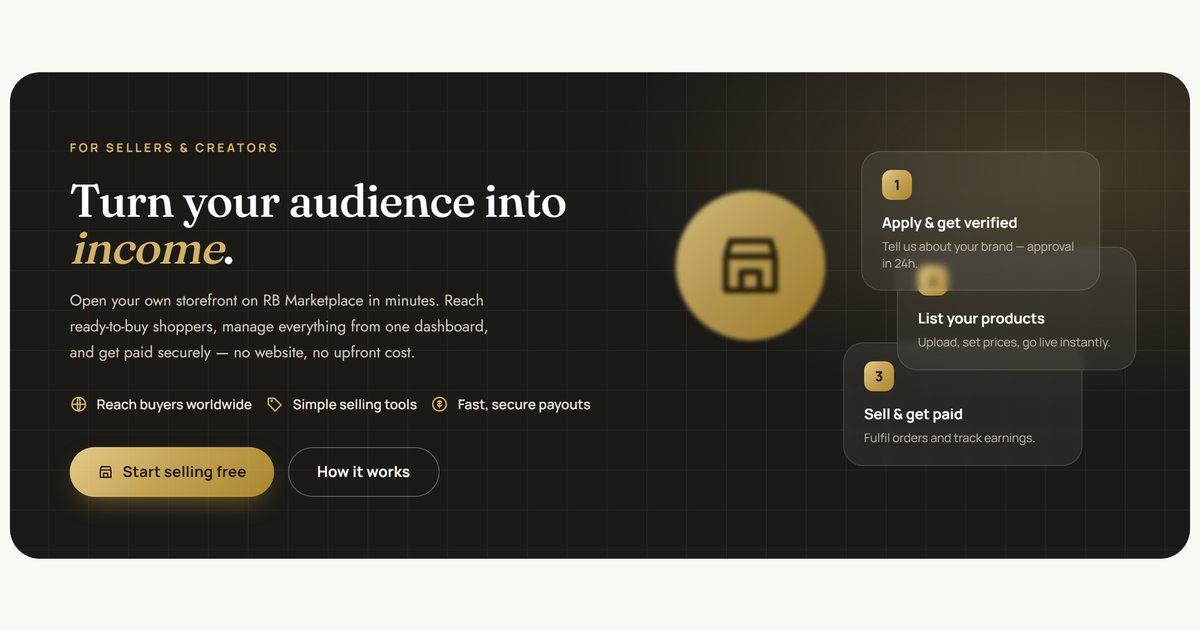
Vendors apply, get approved and sell from their own storefronts; shoppers buy on the web or in the app, with push alerts for orders and deals.
Keep Reading
This portfolio record covers scope and delivery only.
Keep ReadingRelated services and solutions
 AI-enabled ecommerce development for merchants who outgrew templates
Netbase provides custom ecommerce development for merchants that have outgrown templates, to turn existing traffic into orders and run operations with less manual work, using AI for search, recommendations and catalog work where it pays. We build on WooCommerce, Magento 2, Laravel and headless stacks; 4over4, whose store gained an AI recommendation engine, reported 82% more revenue within six months.
Learn More
 Multi-vendor marketplace development: vendors, catalog, payouts and AI search on one platform
A multi-vendor marketplace is a commerce platform where many independent sellers list, sell and get paid through one storefront. Netbase's marketplace solution covers vendor onboarding, a shared catalog, split payments and payouts, with AI for search, listing enrichment and fraud checks. For an EU fashion-tech marketplace, Netbase's work grew gross merchandise value (GMV) 47% and cut vendor onboarding time 60%.
Learn More
Discuss a project
Netbase JSC helps organizations design, build, modernize, and operate digital products and AI-enabled business systems.project@netbasejsc.com
+84 937 869 689
91 Nguyen Chi Thanh, Dong Da, Hanoi, Vietnam
Get in touch
Tell us what you want to build, modernize, or operate.