

AI Customer Service for Print Orders: Status, Reprints and Proof Approvals
Automate order-status lookups and proof-approval reminders: they are read-only or low-risk prompts against data that already exists. Keep reprint approval and colour-critical proof sign-off as a person's decision, because a wrong automated call costs a reprint run, a missed deadline or a client relationship.
Book a solution review See the related solutionBy Huy Nguyen (David), Founder & CEO · Updated 10 Oct 2026 · 11 min read

This guide is for a web-to-print or print-on-demand store owner, or the operations lead who runs its support queue, scoping which post-order questions an AI layer may answer or act on. It assumes the platform already has an online store and a design/approval workflow: see the web-to-print platform guide for the underlying architecture and the ecommerce development service for how Netbase scopes this kind of build.
In this guide
- What "AI customer service for print orders" covers here
- The automate / assist / escalate matrix
- Design the status, reprint and proof-approval flows
- Where AI fits
- What delivery record exists, and what does not
- Alternatives: how a print store handles this today without an AI layer
- Limits of this guide
- Frequently asked questions
- Next step
What "AI customer service for print orders" covers here
Three buyer-facing actions recur on every print store's support queue once a store takes a meaningful order volume:
- Status: "where is my order", "has it shipped", "is my proof ready".
- Reprints: "my print arrived damaged/wrong/misaligned, I need a reprint", including who approves it and under what terms.
- Proof approvals: the digital sign-off a buyer gives before a job goes to press, and the reminders, re-sends and escalations around a proof that is late to approve.
Each is a distinct data problem before it is an AI problem: status reads from the order/production system (see the production routing and scheduling guide for how that status is produced), a reprint decision reads from the order and production history plus a quality claim, and a proof approval reads from the design/preflight step. An AI layer only works once each of these has one system of record; see the integrations guide for how Netbase sequences that wiring across MIS, ERP, CRM, shipping and payment.
The automate / assist / escalate matrix
This is the core decision tool: for each action, the risk is not "can an AI model answer this" but "what does it cost to get wrong, and can the cost be undone."
| Action | Data it reads | Default handling | Why |
|---|---|---|---|
| Order status lookup | Order + production status (MIS/ERP) | Automate | Read-only; wrong or stale data is visible and correctable with no production impact |
| Shipping/tracking lookup | Shipping-carrier status | Automate | Read-only; same reasoning as order status |
| Proof-ready notification and reminder | Preflight/proof-approval step | Automate | A reminder to act is reversible; it never commits production |
| Proof-approval sign-off itself | Design/preflight output | Assist, person decides | The buyer's sign-off (and any Netbase side confirmation that the file matches the approved proof) commits the job to press; an AI layer may summarise what changed since the last proof but should not record consent on the buyer's behalf |
| Reprint eligibility check | Order, production and delivery history | Assist, person decides | Determining whether a claim is covered (platform error, carrier damage, buyer-supplied file fault) needs judgement a status table does not contain |
| Reprint approval and production trigger | Same, plus a cost/capacity decision | Escalate | Commits new production cost and press time; the failure mode (over-approving free reprints, or wrongly denying a valid one) is exactly what should stay a person's call |
| General "where is my X" conversational intake | Free-text buyer message | Automate the intake, not the action | An AI layer may classify the intent and pull the relevant record into a person's or a rule's hands; it should not itself decide the outcome of a reprint or proof dispute |
The pattern: read-only and reversible actions are safe to automate; anything that commits new production cost, confirms legal/commercial consent, or adjudicates a quality claim should stay a person's decision, with the AI layer used to prepare the case (pull the order, the proof history, the production log) rather than decide it. This mirrors the design already used for ordering itself: see agent-ready print ordering through MCP for the same automate-vs-approve split applied to quoting, ordering and reordering through an AI assistant.
Design the status, reprint and proof-approval flows
-
Pick one system of record per action
Order and production status come from the MIS/ERP; proof state comes from the design/preflight step; reprint history comes from the order and production log. An AI layer that reads two disagreeing copies of "order status" will eventually tell a buyer something false.
-
Expose each system of record as a narrow read, not a database link
The AI layer gets a status lookup, a proof state, and an order/production history query; it never gets write access to the order or production tables directly. See AI preflight for customer-uploaded print artwork for the equivalent read/write boundary on the file-checking side: auto-fixes are scoped narrowly, and anything outside that scope escalates rather than guesses.
-
Define the escalation triggers before launch, not after a bad case
At minimum: a reprint request, a proof dispute, a buyer who repeats the same question, a request that implies a refund, and anything the AI layer's intent classifier scores as low-confidence.
-
Route an escalation with full context, not a blank handoff
The person who picks up a reprint or proof dispute needs the order, the proof history and whatever the AI layer already told the buyer, so the buyer never repeats itself.
-
Log who approved what
A reprint approval and a proof sign-off are both decisions with a cost attached; keep an audit trail of the person (or the buyer, for a proof sign-off) and the record they approved against, independent of whether an AI layer prepared the case.
-
Test the boundary, not just the happy path
Before launch, run cases designed to trigger each escalation trigger and confirm the AI layer defers rather than answers; a support flow that only passes on well-behaved questions has not been tested on the cases that matter.
Where AI fits
The genuinely AI part of this design is narrow: classifying a free-text buyer message into one of a small set of intents (status, reprint, proof, something else), summarising an order's history for a human agent picking up an escalation, and drafting (never sending unreviewed) a reminder when a proof has sat unapproved past a deadline. None of that requires the AI layer to decide a reprint claim or record a buyer's consent. Netbase works with the major commercial and open-source AI tools and models, chosen per project, including models from OpenAI, Anthropic (Claude), Google (Gemini) and Meta (Llama) among others, rather than committing to one vendor's roadmap. Each item below states how mature it is at Netbase.
-
In delivered work
WhatsApp AI chatbot with CRM integration
For a client not named, Netbase built an AI chatbot for WhatsApp Business with CRM integration, classifying conversational intent and handing qualified context into the client's workflow; the same intake and handoff shape fits a print order's status, reprint and proof-approval queue.
-
Available capability
Intent classification and case-prep for print order support
Classifying a buyer's status, reprint or proof-approval question and preparing the order, proof and production history for a person to decide; not yet tied to a published, print-specific case.
What delivery record exists, and what does not
What exists: Netbase's Deyar Printing & Advertising build (a bilingual Arabic/English web-to-print platform) already ships pre-flight checks and proof approval as a built workflow, alongside RFQ lead capture and a production back-office — the proof-approval mechanics this guide's AI layer sits on top of. Netbase's own Printcart platform turns online print and personalised-product orders into print-ready files and routed fulfilment, which is the order and production data a status lookup reads from. Netbase's ERP and CRM integration work includes a Vtiger-to-ERP upgrade whose scope explicitly covered customer support tickets, and broader e-commerce-to-ERP integration syncing orders and customer data by API — the plumbing a status and reprint-history lookup depends on. Separately, Netbase has delivered an AI chatbot with CRM integration for conversational intake and workflow automation, and RAG/document-AI work, both for unnamed clients, described here by scope only.
What does not exist: no registered Netbase record describes an AI layer that itself looks up an existing print order's status, approves or denies a reprint, or confirms a proof sign-off on a buyer's behalf. This guide is a growth-capability design, built from the delivery record above plus the platform-integration and AI-delivery pattern Netbase already has, not a case study of a shipped feature. No client name, industry, conversation volume, response time or result figure is published for the anonymised AI work; the Deyar and Printcart detail stays scope-only, with no duration or outcome claimed beyond what is on record.
Alternatives: how a print store handles this today without an AI layer
- Email and phone support only. Works at low order volume; cost scales linearly with orders and buyers wait for business hours. Choose it when order volume does not yet justify building the status/reprint/proof plumbing above.
- Rule-based self-service (order-status page, no conversational layer). A buyer enters an order number and sees status pulled from the MIS/ERP, with no AI involved. Choose it as the first step: it delivers most of the value of "automate order status" in the matrix above without any model, and it is the system of record the later AI layer will read from anyway.
- AI intake with human-decided reprints and proofs (this guide's design). Choose it once support volume makes a conversational front end worth building, and once the order/production/proof systems are wired cleanly enough that an AI layer reads one consistent record per action.
- Fully automated reprint/proof decisions. Not recommended by this guide: it removes the judgement step that catches a mis-scoped claim or a disputed proof, and the cost of a wrong automated reprint approval (new production run) or a wrongly recorded proof sign-off (a job that goes to press on an unapproved file) is asymmetric compared with the cost of a short delay for human review.
Limits of this guide
- The competitor sample behind this guide's information gain is a single-engine web search accessed 2026-10-10; it is a reasoned sample, not an exhaustive scan, and new entrants change the picture.
- No benchmark figures (deflection rate, response time, resolution time) are published here: none is a registered Netbase fact, and third-party figures vary widely by source and method, so none is cited as if it applied to a Netbase build.
- This guide does not cover voice/phone AI receptionists as a channel; it covers the decision of which actions to automate regardless of channel.
Plan the next step with a Netbase consultant
Frequently asked questions
No. Treat reprint approval as a commercial decision with a production-cost consequence; use an AI layer to pull the order, production and prior-claim history for the person who decides, not to decide itself.
No. A proof approval is the buyer's consent to send a specific file to press; an AI layer may summarise what changed since the last version and remind the buyer to act, but the sign-off itself should be the buyer's own action against the system of record, not a model's inference.
Automating order-status and shipping lookups and proof-ready reminders: both are read-only or reversible, and both are common causes of support volume that do not need judgement to resolve.
No. Netbase treats AI tooling as model-agnostic, choosing commercial or open-source models per project; the harder part of this design is wiring one reliable system of record per action, not picking a model.
Next step
This design sits on top of a platform that already tracks orders, production and proofs cleanly; see the printing and packaging industry page for where this fits a print business's wider digital operation, the web-to-print solution for how Netbase scopes the underlying platform, and the Deyar bilingual web-to-print build for a delivered example of the proof-approval workflow this guide's AI layer sits on top of. Netbase's named AI delivery remains 4over4's recommendation engine, the one case tied to a named client. To scope a support/status layer for your own print or personalised-product store, book a solution review.
Work behind this guide
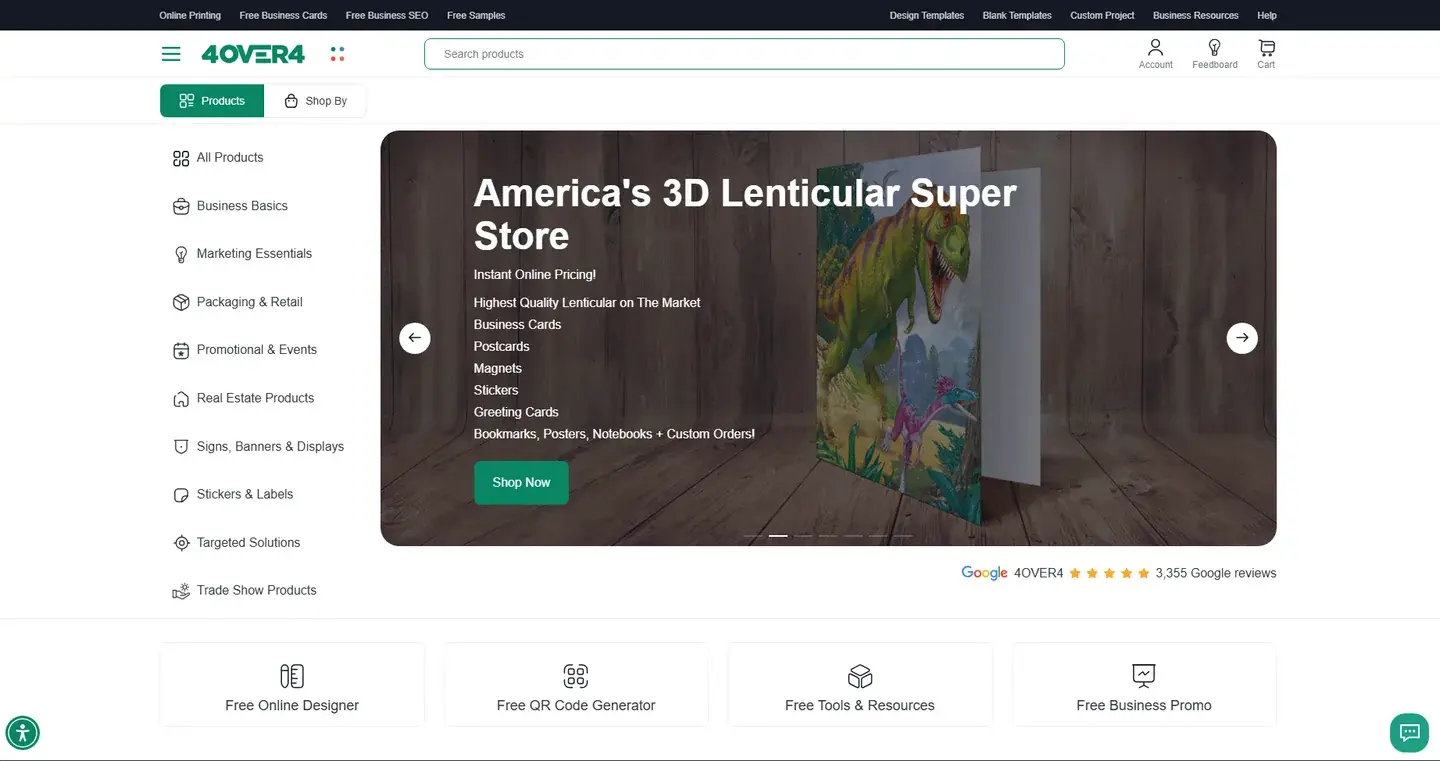
4over4, a US online printing store, had steady traffic but too few orders.
Keep Reading
Netbase built a bilingual Arabic and English web-to-print platform for Deyar Printing & Advertising, a printing, packaging, signage and fleet-branding company in Riyadh.
Keep ReadingRelated services and solutions
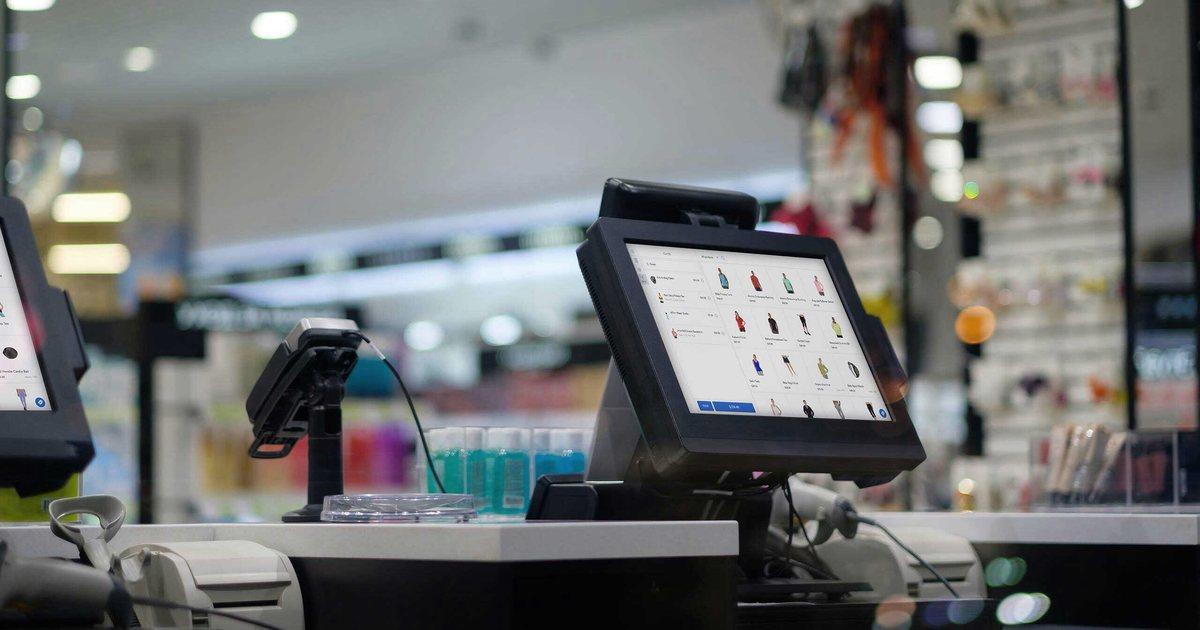 AI-enabled ecommerce development for merchants who outgrew templates
Netbase provides custom ecommerce development for merchants that have outgrown templates, to turn existing traffic into orders and run operations with less manual work, using AI for search, recommendations and catalog work where it pays. We build on WooCommerce, Magento 2, Laravel and headless stacks; 4over4, whose store gained an AI recommendation engine, reported 82% more revenue within six months.
Learn More
 Web-to-print platform with AI design assistance, from online design to a print-ready order
A web-to-print platform is an online ordering, design and prepress workflow that helps print businesses sell custom products: customers configure, design and approve their order online, AI can suggest layouts and catch artwork problems, and production receives a print-ready file. Netbase has delivered 50+ custom web-to-print platforms across apparel, packaging, signage, promotional merchandise and corporate B2B portals.
Learn More
Discuss a project
Netbase JSC helps organizations design, build, modernize, and operate digital products and AI-enabled business systems.project@netbasejsc.com
+84 937 869 689
91 Nguyen Chi Thanh, Dong Da, Hanoi, Vietnam
Get in touch
Tell us what you want to build, modernize, or operate.