

AI brand-compliance checks for corporate print orders: when locked templates are not enough
Locked templates are not enough once corporate buyers can type their own text, upload images, order products without a template or reorder retired designs. Netbase's approach is to map each of those gaps, close the ones a fixed rule can check, let AI flag only the judgement cases, and keep a named brand owner as the final approver.
Book a solution review See the related solutionBy Huy Nguyen (David), Founder & CEO · Updated · 10 min read

This guide is for print businesses that run corporate print portals for client companies, and for the brand and procurement owners on the client side who answer for what gets printed. The web-to-print platform guide covers the platform choice, the B2B print portal requirements cover accounts, roles and approvals, and e-commerce development covers the build.
In this guide
- What can a locked template not control?
- Which checks should a rule own, and which should AI flag?
- The brand-check matrix
- How to add brand checks to an existing portal
- Where AI fits
- What delivery record exists, and what does not?
- Alternatives: how to cover the gaps
- When should you not add AI brand checks?
- What are the limits of this guide?
- Frequently asked questions
- Next step
What can a locked template not control?
A locked template fixes the zones a brand team designed: the logo position, the colour palette, the fonts and the legal lines. Vendors describe the same model; Printbox, for example, presents pre-approved templates with locked and editable zones as the way local teams personalise material within brand guardrails.
-
Editable text fields
- How it goes off-brand
- The buyer types wording the brand would not approve
- Example
- A job title in capitals, a slogan in a name field, an outdated product name
-
Uploaded images
- How it goes off-brand
- A photo or logo arrives from outside the brand library
- Example
- A sub-brand logo saved from a website, a stretched or recoloured mark
-
Off-template products
- How it goes off-brand
- Items ordered from a general catalogue with free design
- Example
- Merchandise, signage or packaging with no template behind it
-
Variable data
- How it goes off-brand
- Imported lists fill the template with unchecked values
- Example
- A staff list with old addresses or inconsistent phone formats
-
Retired designs
- How it goes off-brand
- A reorder repeats artwork from before a rebrand
- Example
- Last year's brochure reordered after the logo changed
-
Regional and language versions
- How it goes off-brand
- Local copy changes length, tone or required notices
- Example
- A translated line that drops a mandatory legal sentence
Every row passes a template lock, because none of them touches a locked zone.
Which checks should a rule own, and which should AI flag?
Split the work by how certain the answer is. A rule owns any check with a clear right answer: a colour value, a minimum logo size, a required field, an approved word list. AI earns a place where the answer is a judgement: whether an uploaded image is really the current logo, whether a sentence sounds like the brand, or whether a photo suits a corporate document. A person decides whatever neither can settle.
Packaging teams already work this way. Packfora describes AI tools that scan artwork layer by layer against the approved copy, barcodes and colour standard, with human review kept for the judgement calls automation cannot make.
The brand-check matrix
| Failure type | Rule check | AI flag | Brand-owner decision |
|---|---|---|---|
| Colour outside the palette | Compare colour values with the brand palette and block | Not needed | Only for an approved exception |
| Logo too small or too close to other elements | Measure size and clear space against the brand rules | Not needed | Only for an approved exception |
| Uploaded logo may be wrong or altered | Check file type and resolution only | Compare the upload with the approved logo set and flag likely mismatches | Approve or reject each flagged upload |
| Free text off-tone or off-message | Block banned words and enforce length and case rules | Flag wording that may break the tone or messaging guide | Approve flagged wording, or send it back |
| Missing mandatory notice | Check required lines exist for the product and region | Flag a translated notice that may have lost its meaning | Confirm the notice before print |
| Image unsuitable for a corporate piece | Check resolution and print size only | Flag images that may not fit the brand's photo guide | Decide case by case |
| Reorder of a retired design | Compare the artwork version with the current brand version and block | Not needed | Approve a deliberate reprint of an old design |
Three rules keep the matrix honest. A rule check that can block should block; do not soften it into an AI suggestion. An AI flag never blocks or approves on its own; it sends the order to a person with the reason written in plain words. And the brand owner is a named role at the client company, not the print operator, because the print business cannot judge another company's brand.
How to add brand checks to an existing portal
-
Write the brand rules as data
Turn the brand guide into palette values, logo sizes and clear space, approved words, required notices per product and region, and the current artwork version of every template.
-
Map the gaps per client
For each client company, list which of the six gaps above its orders actually reach: some only order business cards from locked templates, others upload their own artwork every week.
-
Ship the rule checks first
Add the checks with a clear answer at the editor and again before the proof, so a buyer sees the problem while still ordering.
-
Add AI flags only where a rule cannot decide
Start with the gap that produces the most rejected proofs, usually uploaded logos or free text, and route each flag to the brand owner's approval queue.
-
Record every decision
Keep the flag, the reason and the brand owner's answer on the order, so the next rule can be written from real decisions instead of guesses.
-
Review the flags with the client
A flag the brand owner always confirms can become a rule; one they always override should go.
Approval chains are where these flags land. Web2Print Solutions, a Netbase brand, offers a B2B print portal with organisations, approval chains, cost centres and contract pricing, which is the kind of place a brand owner's approval queue sits.
Where AI fits
AI's job in brand compliance is to notice and explain, not to approve. A model can compare an uploaded logo with the approved set, read free text against a tone guide, and write a short reason a brand owner can act on in seconds. Engineers still write and test every rule check and make sure a flag cannot release an order by itself. Frontify, a brand-management vendor, describes AI applying brand rules in the background while people make the judgement calls, the same division of work this guide uses. Netbase works with the major commercial and open-source AI tools and models, chosen per project, and the one delivered AI feature named with a client is 4over4's product-recommendation engine, which is unrelated to brand checks.
Corporate artwork can carry unreleased products and confidential material, so agree which AI services may process it and that it is not used to train third-party models.
- Available capability
AI-assisted brand-compliance flags under human approval
Logo-match and tone flags routed to a named brand owner, with the reason on the order; not yet tied to a published brand-compliance case.
- In delivered work
Document AI platform
For a different client (not named), outside print, Netbase delivered a document AI platform that reads business documents; no Netbase record yet applies it to print brand checks.
What delivery record exists, and what does not?
Netbase has delivered 50+ custom web-to-print platforms across apparel, packaging, signage, promotional merchandise and corporate B2B portals. The records closest to this topic:
- ACT Printing, a custom apparel and print shop. Netbase built a guided ordering flow where artwork upload and preview are bound to the print location the buyer chose; B2B accounts and proofs were planned for a second phase and AI for a third, so neither is delivered scope. See the ACT Printing record.
- Deyar Printing & Advertising. For a printing, packaging, signage and fleet-branding company, Netbase built a bilingual web-to-print platform with an online designer for templates and uploads, pre-flight checks and proof approval; an AI design and pre-press suite is planned as a later phase, not delivered. See the Deyar record.
What does not exist. No published Netbase record describes a delivered AI brand-compliance check for print orders; the matrix above is a design framework, not a measured result. No figure for rejected proofs, reprints avoided or time saved is published, and none is claimed here.
Alternatives: how to cover the gaps
| Route | Strength | Choose it when |
|---|---|---|
| Tighter templates only | Simple; nothing new to run or explain | The client orders a short list of products and rarely uploads anything |
| Manual brand approval on every order | A person sees everything | Order volume is low and the brand owner has time to review each proof |
| A design tool with built-in brand checks | Checks ready-made inside the editor | Your editor already supports brand kits and export validation, as IMG.LY shows when it validates every export against the brand kit |
| Rule checks plus AI flags in your own platform | Checks fitted to each client's brand and products, with one approval record | You serve several corporate clients with different brand rules and real upload volume |
In Netbase's own delivery, brand checks are scoped and built inside a web-to-print engagement rather than sold as a separate product, and most Netbase projects run on fixed-price contracts agreed after discovery. The AI preflight guide covers the technical file checks that run alongside brand checks, and the generative AI editor guide covers the generation features that create new brand risk inside the editor.
When should you not add AI brand checks?
Skip the AI layer when templates already cover what the client orders, when uploads are rare, or when nobody at the client will own the approval queue. An AI flag without a named person to answer it only delays orders. The NIST AI Risk Management Framework makes the same point in general terms: an AI system needs defined human oversight before it is trusted with decisions.
What are the limits of this guide?
- The gaps and the matrix are a starting framework; each client's brand guide adds its own rows.
- Design tools change quickly; re-check what a tool validates before relying on it.
Plan the next step with a Netbase consultant
Frequently asked questions
Only when buyers order a fixed set of templated products and never upload or type free content. Once orders include editable text, uploaded images, products without a template or reorders of old designs, a lock leaves gaps that need checks.
It should not. AI is useful for flagging a likely wrong logo or off-tone wording and explaining why, but the approval belongs to a named brand owner at the client company, and fixed rules such as colour values should be checked by rules.
A named brand owner at the client company, not the print operator. The print business can enforce the rules it is given, but only the client can decide whether an exception is acceptable for its own brand.
Next step
Tell us which of your corporate clients' orders go off-brand today and where, and we will book a solution review to map the gaps and decide which checks a rule, an AI flag or a brand owner should own. The web-to-print platform solution shows how Netbase delivers it, and printing and packaging covers the industry view.
Work behind this guide
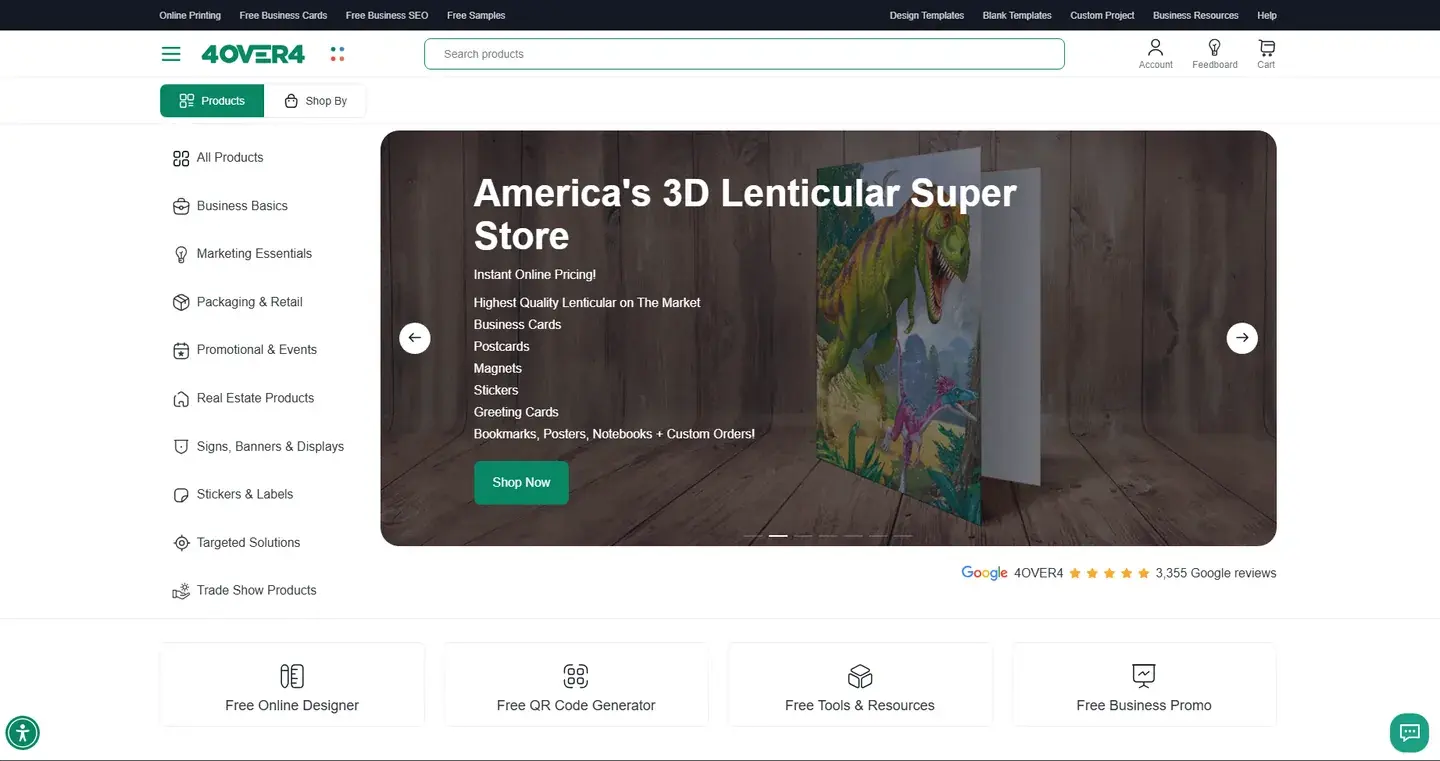
The same work also automated Adobe Illustrator (.ai) to SVG file conversion and added product recommendations for shoppers.
Keep Reading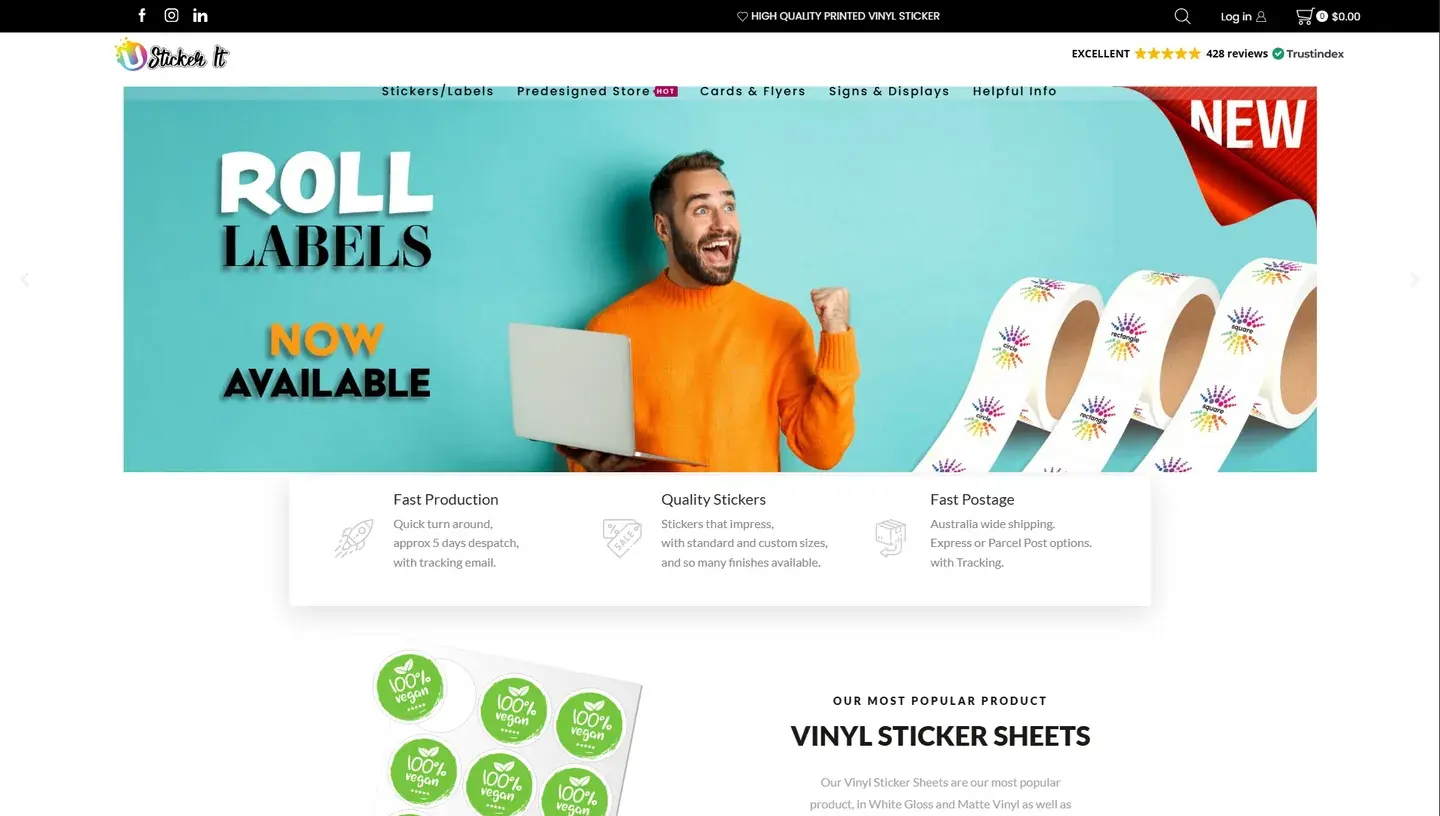
Customers who used USticker's online design tool converted 40% more often in the first six months after Netbase JSC let them set background images and colors.
Keep ReadingRelated services and solutions
 AI-enabled ecommerce development for merchants who outgrew templates
Netbase provides custom ecommerce development for merchants that have outgrown templates, to turn traffic into orders with less manual work, using AI for search, recommendations and catalog work where it pays. We build on WooCommerce, Magento 2, Laravel and headless stacks; 4over4, whose store gained an AI recommendation engine, reported 82% more revenue within six months.
Learn More
 Web-to-print platform with AI design assistance, from online design to a print-ready order
A web-to-print platform is an online ordering, design and prepress workflow that helps print businesses sell custom products: customers configure, design and approve their order online, AI can suggest layouts and catch artwork problems, and production receives a print-ready file. Netbase has delivered 50+ custom web-to-print platforms across apparel, packaging, signage, promotional merchandise and corporate B2B portals.
Learn More Related insights

A web-to-print implementation succeeds when ten things are settled before launch: products and pricing, the online designer, previews, print-ready files, checkout, speed, integrations, ownership, accessibility and a recorded baseline. This checklist turns each one into a decision with an owner and a test, drawn from Netbase's delivered print projects.

Web-to-print software: architecture, AI design assistance, build vs buy, and ROI
Web-to-print software must do four jobs: sell print products with rule-based pricing, let buyers design online, turn every design into a print-ready file, and pass the order to your MIS or ERP. AI assists design and repairs rough uploads. Buy when a product fits your workflow, build when the workflow is your edge, and measure ROI against a baseline.

Web-to-print customer stories: what print businesses asked for, and where AI fits
Print businesses rarely need a whole new platform. Customers of Netbase's CMSmart division, from label and invitation printers to a Singapore large-format printer, mostly started with a packaged print store or online designer and asked for the few changes their orders depended on. This guide groups those stories by use case and shows where AI fits today.

Online design editor for print: buy it, extend it or build it
Buy a proven online design editor when your products are standard and your advantage lies elsewhere. Extend a bought editor when you need a few tools it lacks, such as a page preview bar or a background picker. Build your own only when the editor itself is why buyers choose you and you can fund its upkeep for years.
Work with Netbase remotely
Every Netbase engagement is delivered remotely, so clients in any country and any industry can work with us; Netbase has worked with clients in 80 countries. Contracts and invoices are issued by Netbase JSC, and payment is made by bank transfer to Netbase JSC's company account or PayPal Business. Talk to the CEO, Huy Nguyen (David), on WhatsApp or by email.
Discuss a project
Netbase JSC helps organizations design, build, modernize, and operate digital products and AI-enabled business systems.project@netbasejsc.com
+84 937 869 689
91 Nguyen Chi Thanh, Dong Da, Hanoi, Vietnam
Get in touch
Tell us what you want to build, modernize, or operate.