

AI order intake for print shops: turning emailed requests and PDFs into quotes and job tickets
AI order intake for a print shop means a model reads each emailed request and PDF into one structured intake record and flags what is missing, while price rules, an estimator and a production lead keep the quote, the approval and the job ticket. Netbase sequences it this way so speed never costs margin or reprints.
Book a solution review See the related solutionBy Huy Nguyen (David), Founder & CEO · Updated · 11 min read

This guide is for print shop owners, estimators and operations managers who still retype emails into estimates and job tickets. It sits under the web-to-print platform guide and covers the intake step that comes before AI instant quoting. The build itself is usually part of e-commerce development work on the store, the portal or the back office.
In this guide
- Why does order intake break in a print shop?
- What must an intake record contain before it can be quoted?
- Who owns each intake step: rule, AI or person?
- How to build AI order intake into a print workflow
- Where AI fits
- What delivery record exists, and what does not?
- Alternatives: how a print shop can handle intake
- When should a print shop not use AI for intake?
- What are the limits of this guide?
- Frequently asked questions
- Next step
Why does order intake break in a print shop?
Order intake breaks because the request arrives in a form nobody can price. A buyer writes "500 flyers like last time, but glossy, need them Friday", attaches a PDF with no bleed and forwards a thread with three earlier versions. Someone has to work out the product, the stock, the size, the finishing, the quantity, the artwork status and the date before an estimate can start.
The cost is hidden: staff copy the same details into several systems, missing details are found late by prepress, and requests sitting in personal inboxes get lost.
AI helps with the reading, not with the price or the press. That split decides the whole design.
What must an intake record contain before it can be quoted?
An intake record is complete when an estimator could price it and production could plan it without opening the original email. Every channel (email, PDF attachment, web form, chat or phone note) should end up in the same record, so quoting and the job ticket read one source.
-
Customer and contact
- Example fields
- Account, contact, delivery address on file, tax status
- Who fills it
- Lookup against the CRM or customer table
-
Product and specification
- Example fields
- Product family, size, pages, stock, colours, finishing, quantity per version
- Who fills it
- AI extraction, checked against the catalog
-
Artwork
- Example fields
- Attached files, page count, bleed and resolution status, proof needed
- Who fills it
- File parser and preflight rules
-
Dates and logistics
- Example fields
- Required date, split deliveries, shipping method
- Who fills it
- AI extraction, confirmed by a person if unclear
-
Commercial
- Example fields
- Reference number, price list, repeat of an earlier job
- Who fills it
- Rules against the order history
-
Status
- Example fields
- Complete, missing details, needs estimator, declined
- Who fills it
- Completeness rule
The completeness rule is simple and should be code, not a model: a record moves to quoting only when every required field for its product family has a value that maps to the catalog. Anything else goes back to the customer with a short question or to a person, never to the pricing engine with a guessed value.
Who owns each intake step: rule, AI or person?
The matrix assigns each step to its safest owner: a model suggests, rules decide what is allowed, and a person signs whatever commits money or press time.
| Step | Owner | What the owner does | Why not the others |
|---|---|---|---|
| Capture and thread grouping | Rule | Shared inbox, form and chat feed one queue; threads merge by reference | A model is not needed to file mail |
| Classify the request | AI suggestion | New quote, repeat order, artwork update, complaint or spam | Rules miss free text; a person checks low-confidence items |
| Extract the specification | AI suggestion | Product, size, stock, quantity, finishing and dates into fields | This is the reading work AI does well |
| Map to the catalog | Rule | Each value must match a product, stock and finish the shop sells | A model can invent a stock that does not exist |
| Ask for missing details | AI draft, person sends | Short question listing only the missing fields | Wording helps; sending commits the shop |
| Price the job | Rule | Pricing engine on the shop's own price tables | A language model can return a confident wrong number |
| Approve and send the quote | Person | Estimator approves above set thresholds or for new customers | A quote is a commercial commitment |
| Create the job ticket | Rule | Ticket built from the accepted quote and the intake record | Copying by hand is where errors start |
| Release to production | Person | Production lead releases after artwork and proof checks | Press time and stock are committed here |
The model never writes a price, and an extraction error is caught at catalog mapping before it reaches a quote.
How to build AI order intake into a print workflow
-
Collect real requests first
Export a few hundred anonymised emails and attachments and tag each one: quote, repeat, change or noise. This is the test set.
-
Define the intake record per product family
Write the required fields and allowed catalog values for each family you sell.
-
Connect the channels to one queue
Route the shared inbox, web forms and chat into one queue with a status.
-
Add extraction with a confidence flag
The model marks each field as read, inferred or missing; inferred values go to a person, never straight to pricing.
-
Map to the catalog and run the completeness rule
Unmatched values stop the record; missing fields create a short customer question.
-
Hand complete records to the pricing engine and the estimator
The estimator approves within the thresholds you set.
-
Generate the job ticket from the accepted quote
The ticket carries the same fields, the artwork files and the proof status, and it can be exported in the format your MIS or workflow reads, such as the Job Definition Format (JDF) where the shop uses it.
Before go-live, compare every extracted field on the test set with what a person entered. Fix the record design and catalog mapping first; prompt changes come last.
Where the shop needs the pricing step itself built from its estimating rules, Web2Print Solutions, a Netbase brand, offers print pricing engine engineering with a trace for every quote.
Where AI fits
AI's job in order intake is reading unstructured requests: classifying the message, pulling the specification out of free text and PDF attachments, and drafting the question for missing details. Engineers still own the catalog mapping, the completeness rule, the pricing engine, the job-ticket generation and the audit log, because those must be deterministic and testable. Netbase works with the major commercial and open-source AI tools and models, chosen per project, and the one delivered AI feature named with a client is 4over4's product-recommendation engine, which is not an intake system.
Treat every email and attachment as untrusted input. A request can carry instructions aimed at the model, which is the risk described as prompt injection by OWASP, so the model gets no tool that sends a quote, changes a price or releases a job. Agree which AI services may process customer files, and that they are not used to train third-party models.
- Available capability
AI extraction of print specifications from emails and PDFs
Classification and field extraction into an intake record, with confidence flags and catalog checks before pricing; not yet tied to a published print intake case.
- In delivered work
Document AI platform
For a client (not named), Netbase delivered document AI; it shows how Netbase puts extracted fields under human review, and it is not a print intake system.
- In delivered work
WhatsApp AI chatbot with CRM integration
For a client (not named), Netbase built a chatbot on the WhatsApp Business API that syncs with the client's CRM for lead capture; it shows a chat channel feeding a structured record, and it is not a print quoting system.
What delivery record exists, and what does not?
Netbase has delivered more than 50 custom web-to-print platforms, listed on its web-to-print platform solution page. Two print records touch the steps in this guide.
For Deyar Printing & Advertising, a printing, packaging and signage company, Netbase (Printcart) built a bilingual web-to-print platform with RFQ lead capture, dynamic print pricing, proof approval, multi-branch ordering and a production back-office. That is the structured side of intake: requests captured as records and priced by rules.
For ACT Printing, a custom apparel and print shop, Netbase (through CMSmart and Printcart) built a guided ordering flow with structured order data and a production summary per order for staff, which is the job-ticket end of the same chain.
What does not exist: no Netbase record yet shows a delivered AI system that reads print requests from email or PDF, and no record states a measured result for quote turnaround, admin time or reprints. The AI items above are anonymised and outside print. Most Netbase projects are delivered on fixed-price contracts, with scope set after discovery.
Alternatives: how a print shop can handle intake
| Option | Strength | Risk | Choose it when |
|---|---|---|---|
| Manual intake by customer service | No build; people handle odd requests well | Retyping, lost requests, late discovery of gaps | Low volume or mostly one-off, complex work |
| Structured web RFQ form or portal | Clean fields from the start | Many buyers still email; forms can feel slow | Repeat B2B buyers and standard products |
| Off-the-shelf intake or estimating tool | Fast start, vendor maintains the model | Fixed record design; your data in another system | Your products fit its catalog model |
| Custom intake layer on your store or MIS | Record, rules and job ticket fit your shop | Build and upkeep effort; needs test data | Mixed channels, own price tables, an existing MIS |
Select by the share of requests that arrive as free text, how standard your products are, whether your price tables live in code, and which system owns the job ticket. Tools such as QuoteJet route a drafted estimate to an estimator. Connecting intake to the MIS is covered in the guide to web-to-print integrations with MIS, ERP and CRM.
When should a print shop not use AI for intake?
Do not add AI intake when most requests already arrive through a structured form; improve the form instead. Do not add it before your price tables and catalog are clean, because extraction into a messy catalog only moves the confusion. Skip it when a few large accounts send complex jobs an estimator reads in minutes. Do not let it near jobs with legal or regulated content checks until a person reviews every record.
What are the limits of this guide?
This guide covers intake up to the job ticket, not pricing engine design, artwork preflight or scheduling. It names no extraction accuracy, because accuracy depends on your requests and catalog, and it states no Netbase result for print intake.
Plan the next step with a Netbase consultant
Frequently asked questions
It should not. AI can read the specification from the email, but the price should come from the shop's own pricing rules, and an estimator should approve quotes above set thresholds or for new customers.
The completeness rule stops the record before pricing. The system drafts a short question listing only the missing fields, and a person sends it or a template sends it for routine gaps.
It is safe only under agreed terms. Decide which AI services may process customer files, keep them out of third-party model training, and treat every email as untrusted input with no power to send quotes or release jobs.
Next step
Send us a sample of anonymised requests and tell us which estimating system and MIS you run, and we will book a solution review to decide which intake steps to automate, where the record should live and where a person must stay in the loop. The printing and packaging page covers the industry view, and the guide to AI customer service for print orders covers what happens after the order exists.
Work behind this guide
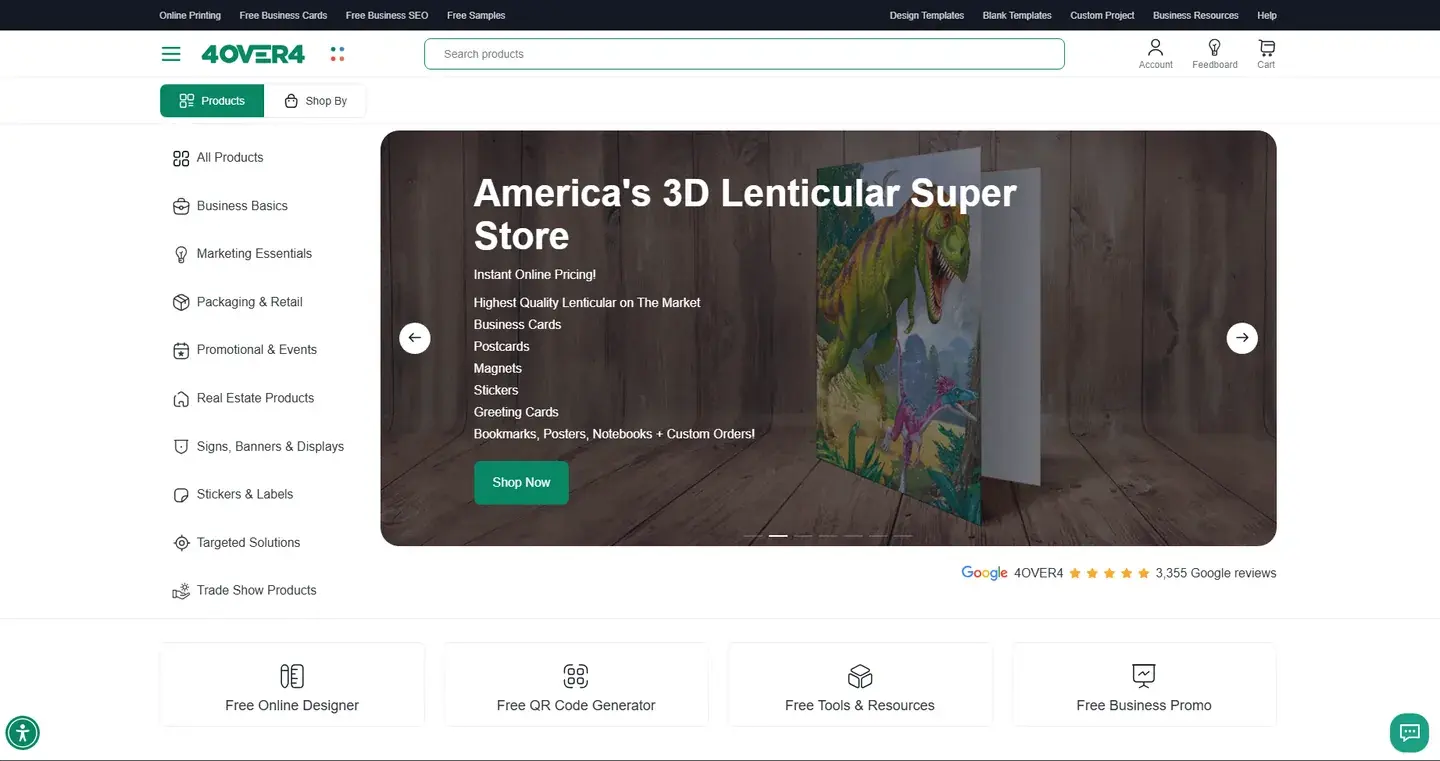
4over4, a US online printing store, reported 82% higher e-commerce revenue within six months after Netbase JSC remotely reworked its checkout, search and navigation.
Keep Reading
ACT Printing's customers order printed hoodies, tees and sweatshirts in several colours, sizes and print locations in one guided flow, and every order reaches production as structured data with its artwork. Netbase delivered the flow for the custom apparel and print shop remotely through its CMSmart and Printcart divisions; the client's country is not published.
Keep Reading
Netbase delivered a bilingual Arabic and English web-to-print platform remotely, through its Printcart division, so business and government buyers design, price and order online and every order reaches production as a checked, print-ready file.
Keep ReadingRelated services and solutions
 AI-enabled ecommerce development for merchants who outgrew templates
Netbase provides custom ecommerce development for merchants that have outgrown templates, to turn traffic into orders with less manual work, using AI for search, recommendations and catalog work where it pays. We build on WooCommerce, Magento 2, Laravel and headless stacks; 4over4, whose store gained an AI recommendation engine, reported 82% more revenue within six months.
Learn More
 Web-to-print platform with AI design assistance, from online design to a print-ready order
A web-to-print platform is an online ordering, design and prepress workflow that helps print businesses sell custom products: customers configure, design and approve their order online, AI can suggest layouts and catch artwork problems, and production receives a print-ready file. Netbase has delivered 50+ custom web-to-print platforms across apparel, packaging, signage, promotional merchandise and corporate B2B portals.
Learn More Related insights

A web-to-print implementation succeeds when ten things are settled before launch: products and pricing, the online designer, previews, print-ready files, checkout, speed, integrations, ownership, accessibility and a recorded baseline. This checklist turns each one into a decision with an owner and a test, drawn from Netbase's delivered print projects.

Web-to-print software: architecture, AI design assistance, build vs buy, and ROI
Web-to-print software must do four jobs: sell print products with rule-based pricing, let buyers design online, turn every design into a print-ready file, and pass the order to your MIS or ERP. AI assists design and repairs rough uploads. Buy when a product fits your workflow, build when the workflow is your edge, and measure ROI against a baseline.

Web-to-print customer stories: what print businesses asked for, and where AI fits
Print businesses rarely need a whole new platform. Customers of Netbase's CMSmart division, from label and invitation printers to a Singapore large-format printer, mostly started with a packaged print store or online designer and asked for the few changes their orders depended on. This guide groups those stories by use case and shows where AI fits today.

Online design editor for print: buy it, extend it or build it
Buy a proven online design editor when your products are standard and your advantage lies elsewhere. Extend a bought editor when you need a few tools it lacks, such as a page preview bar or a background picker. Build your own only when the editor itself is why buyers choose you and you can fund its upkeep for years.
Work with Netbase remotely
Every Netbase engagement is delivered remotely, so clients in any country and any industry can work with us; Netbase has worked with clients in 80 countries. Contracts and invoices are issued by Netbase JSC, and payment is made by bank transfer to Netbase JSC's company account or PayPal Business. Talk to the CEO, Huy Nguyen (David), on WhatsApp or by email.
Discuss a project
Netbase JSC helps organizations design, build, modernize, and operate digital products and AI-enabled business systems.project@netbasejsc.com
+84 937 869 689
91 Nguyen Chi Thanh, Dong Da, Hanoi, Vietnam
Get in touch
Tell us what you want to build, modernize, or operate.