

Open-source, hosted or custom web-to-print software: licence, maintenance and exit
Score the route by what you own after launch, not its price at checkout: open source has no licence fee but makes you the maintainer, a hosted or SaaS platform charges a subscription but a vendor patches and runs it, and a custom build costs more upfront but fits a workflow no packaged product can.
Book a solution review See the related solutionBy Netbase Web-to-Print and Print Commerce Desk · Reviewed by David (CEO) · Updated · 10 min read

This guide is for print business owners, operations leads and IT leads deciding how to run a web-to-print storefront, once the software architecture and ROI basics are understood. It stays one level above the hosted-vs-plugin-vs-API-first platform model question and the editor-only build vs buy decision: this page decides who holds the licence and the maintenance burden for the whole platform, before either of those narrower questions comes up.
In this guide
- Does "free" open-source software actually cost less?
- Three routes, compared
- What a self-hosted open-source platform demands that a licence fee never would
- A sequencing plan for deciding
- Where AI fits in this decision
- What delivery record exists, and what does not
- Alternatives: who runs each route day to day
- Limits of this guide
- Frequently asked questions
- Next step
Does "free" open-source software actually cost less?
Not once you count what the licence fee never covered. Open-source web-to-print code avoids a subscription or purchase price, but every source on hosting, security and update costs you absorb yourself confirms the same pattern: hosting, SSL, compliance, security patching, performance tuning and feature development all become your bill, and industry maintenance estimates put ongoing upkeep at 15-25% of the original build cost every year (CloudLab Solutions, accessed 2026-10-28). A hosted or SaaS platform turns that same cost into a predictable subscription the vendor already amortises across every customer it runs (PageDNA, accessed 2026-10-28); it remains cheaper than "free" the moment your team would otherwise spend its own hours patching and securing a server.
Three routes, compared
| Criterion | Open source, self-hosted | Hosted / SaaS | Custom-built |
|---|---|---|---|
| Licence cost | No licence fee; you pay hosting, security and your own development time | Subscription, usually per store or per order volume | Highest upfront cost; no third-party licence beyond any libraries used |
| Who maintains it | You: patching, dependency updates, uptime, backups, and every feature the community has not built | The vendor: patches, uptime, scaling and security are included | You, or the partner you keep under a support agreement, for as long as you run it |
| How hard to leave | Lowest lock-in on the code itself, but your own customizations and data model may not transfer cleanly | Highest: your catalog, orders and design data live in the vendor's model, and export quality varies by vendor | You own the code outright, but only your team or partner knows it well enough to hand it to someone else |
| Choose it when | You have in-house engineering capacity and want to own and extend the code indefinitely | Your catalog fits the product's model and you want the vendor to own the operational burden | Your pricing, product or integration needs do not fit any packaged product, open source or hosted |
No route is free of ongoing cost; each simply moves the bill between a licence fee, a maintenance team and a partner's time.
What a self-hosted open-source platform demands that a licence fee never would
Running open-source commerce code yourself means Netbase's own security practice becomes your minimum bar, not an upgrade: secure code review and version control, encryption in transit and at rest, role-based access control, multi-factor authentication for admin access, and regular vulnerability scanning and penetration testing. A community project ships code; it does not ship a team that applies these controls to your specific deployment, so that work is yours (or your partner's) to do on every release, not once at setup.
Netbase has delivered this pattern directly: for a Dubai-based loyalty and rewards technology company, Netbase built a headless multi-store reward shop platform on Magento 2 Open Source with a Next.js front end, including its own SSO, payment gateway integrations and a multi-vendor module with fulfilment routing. The platform is self-hosted, open-source commerce code that Netbase configured, secured and operates for the client, not a store the client runs unassisted. It is not a print platform, but it shows the same shape print businesses face: open-source code gives you the source, not a maintenance team.
A sequencing plan for deciding
-
List what the platform must do that a generic store cannot
, from the architecture guide: rule-based pricing, an online designer, and a print-ready file handoff to your MIS or ERP.
-
Check whether an open-source or hosted product already covers that list
If yes, the licence question is mostly about who you want maintaining it, not whether the software exists.
-
Count your own engineering capacity honestly
Open source needs a team that will still be patching it in three years, not just at launch.
-
Price the subscription against the maintenance estimate
, not against zero: a hosted platform's yearly fee competes with the 15-25% of build cost that open-source upkeep typically costs, not with "free."
-
Decide how much lock-in you can tolerate
A hosted platform's export quality and a self-hosted platform's undocumented customizations are both exit costs; neither route escapes this question, only the shape of the cost changes.
-
If nothing fits, scope a custom build
, and settle what you hand to a development partner and what you keep before the contract is signed.
Where AI fits in this decision
AI changes which maintenance tasks are expensive, not which route is "right." On a self-hosted open-source platform, you (or your partner) choose and wire in AI features yourself; on a hosted platform, you get whatever the vendor ships, on its schedule. Netbase works with the major commercial and open-source AI models, chosen per project, rather than one vendor's stack.
-
In delivered work
Product recommendation engine
Built for 4over4's online printing store from browsing and purchase history; it illustrates a feature a hosted platform's vendor can add centrally, where a self-hosted deployment would need its own integration.
-
Available capability
AI-assisted platform-fit scoring
Scoring a store's catalog and systems against the decision matrix above is a machine learning and generative AI feature Netbase is growing; it is not yet tied to a published licence-decision case.
What delivery record exists, and what does not
Netbase has delivered on all three routes, though not for one client choosing between them on a single project:
- Open source, self-hosted. For a Dubai-based loyalty and rewards technology company, Netbase built a headless reward-shop platform on Magento 2 Open Source with a Next.js front end, including SSO, payment gateways and a multi-vendor fulfilment module, delivered in four phases over about 3.5 to 4.5 months. See the headless reward shop record. It is self-hosted, open-source commerce code, not a web-to-print platform by name.
- Hosted / SaaS. Printcart, a Netbase Business Division, is a hosted web-to-print SaaS: it runs on a merchant's own store or as a Shopify, Wix or WooCommerce app, with setup in about 7 days, and Netbase both built and still operates it.
- Custom-built. Netbase has delivered 50+ custom web-to-print platforms across apparel, packaging, signage, promotional merchandise and corporate B2B portals.
- Platform migration (exit cost, not web-to-print specific). The Netztech Magento 1 to Magento 2 Commerce replatform took 35 working days and included an extension migration of 11 modules, a concrete data point for what "leaving" a platform actually costs in effort. See the Netztech migration record.
What does not exist. No published Netbase record compares open-source, hosted and custom routes for one client choosing between them, and none publishes a maintenance-hours, migration-cost or total-cost-of-ownership figure for a web-to-print platform specifically. The 15-25% yearly maintenance estimate above is industry commentary, not a Netbase figure, and the Netztech migration duration is a Magento replatform, not a web-to-print-to-web-to-print move. In custom development the client owns the IP created for it; Netbase's own productized modules, including Printcart, are licensed one-time or as SaaS, not transferred as source code.
Alternatives: who runs each route day to day
| Route | Strength | Choose it when |
|---|---|---|
| Your own team, running open-source code | Full control of the code and roadmap; no licence fee | You already have engineers who will own the server, the patches and the upgrades |
| A hosted or SaaS vendor's own support | No server to run; the vendor's team absorbs the operational load | Your catalog and pricing fit the product and you prefer a subscription to a maintenance team |
| A development partner, on open source or a custom build | One team across the code, security practice and roadmap, without hiring in-house | You want the control of owning the code without carrying its maintenance alone |
In Netbase custom development the client owns the IP created for it, and most Netbase projects are delivered on fixed-price contracts agreed after discovery. The offer sits in e-commerce development, delivered for printing and packaging businesses through the web-to-print platform solution. Once a licence route is chosen, the hosted, plugin or API-first guide picks the architecture, and a later move between platforms is covered in web-to-print migration.
Limits of this guide
- No price, subscription fee or licence cost figure is published for any named open-source project, SaaS vendor or Netbase route; the 15-25% maintenance estimate cited above is a third-party figure, stated as such.
- No published Netbase record compares all three routes for one client; the delivery records above show the pattern of each route separately, not a single measured comparison.
- Open-source project quality, community activity and vendor pricing all change; confirm a specific product's current state before deciding.
Plan the next step with a Netbase consultant
Frequently asked questions
No. There is no licence fee, but hosting, security patching, performance tuning and ongoing development become your responsibility or your partner's, and industry estimates put that upkeep at 15-25% of the original build cost every year.
Not necessarily. A hosted platform's subscription stops when you leave, but your catalog, designs and order history live in its data model and export quality varies by vendor; open-source code has no such lock-in, but your own customizations may be just as hard for a new team to untangle.
Yes, but plan the data export path from day one; design templates, pricing rules and order history rarely move automatically between an open-source codebase and a hosted vendor's model.
No. Netbase has delivered self-hosted open-source commerce builds, operates its own hosted Printcart SaaS, and delivers custom web-to-print platforms; the web-to-print platform solution covers the delivery options.
Next step
Tell us whether you are weighing open source, a hosted platform or a custom build, and we will book a solution review to score your catalog, team capacity and exit risk against the criteria above. You can also see the web-to-print platform solution or browse more Netbase insights.
Work behind this guide
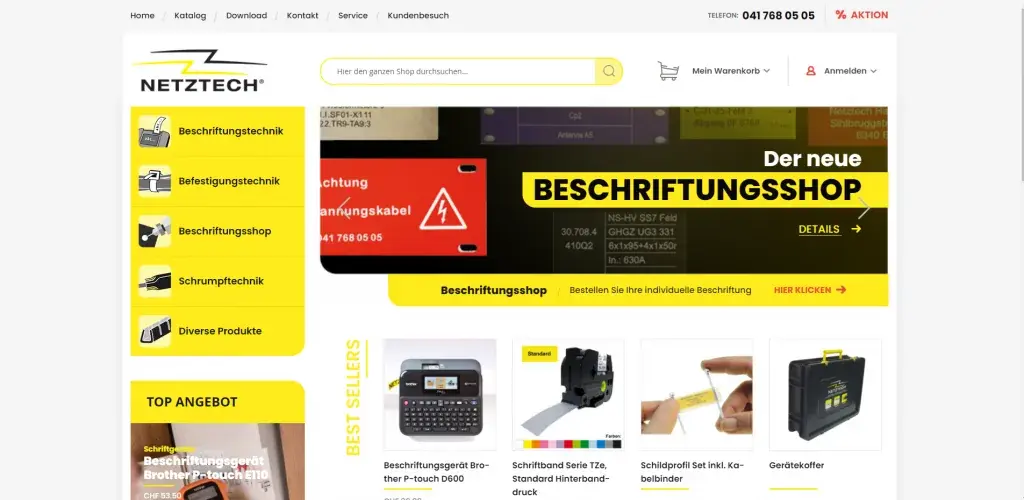
Netbase JSC delivered the migration remotely: all store data moved, 11 extensions rebuilt and a new design applied, finished in 35 working days.
Keep Reading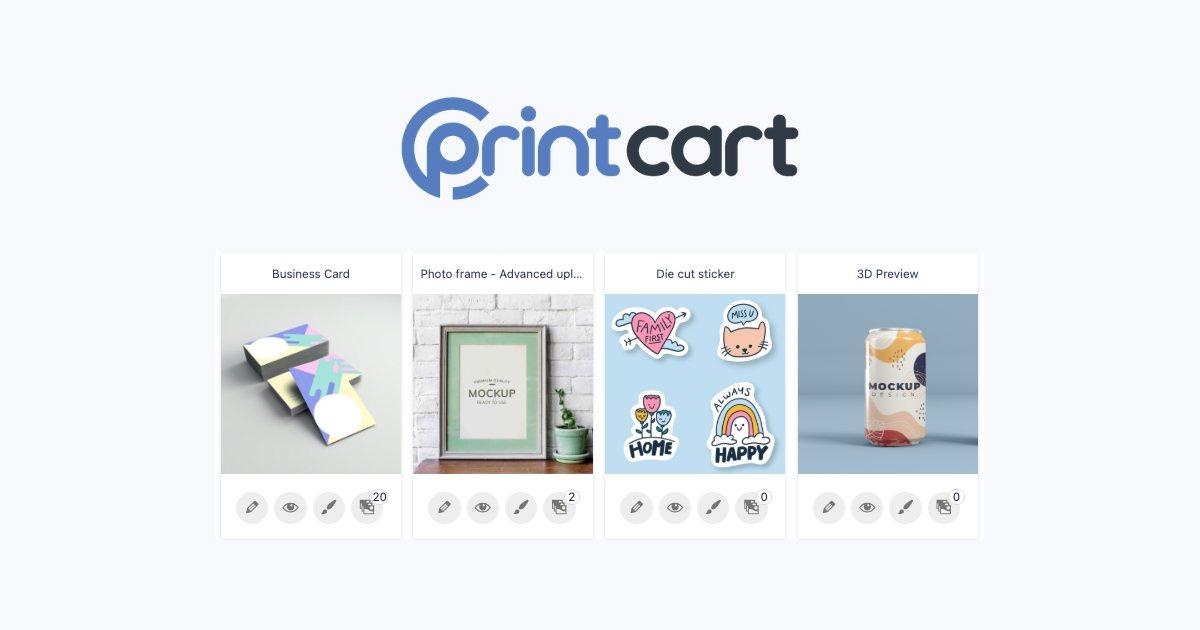
Printcart is Netbase's own web-to-print SaaS, built and run from Vietnam for print businesses that needed online design, print-ready files and order management plugged into any storefront.
Keep Reading
A loyalty and rewards technology company in Dubai, United Arab Emirates, not named under a non-disclosure agreement, needed many branded reward shops on one platform.
Keep ReadingRelated services and solutions
 AI-enabled ecommerce development for merchants who outgrew templates
Netbase provides custom ecommerce development for merchants that have outgrown templates, to turn traffic into orders with less manual work, using AI for search, recommendations and catalog work where it pays. We build on WooCommerce, Magento 2, Laravel and headless stacks; 4over4, whose store gained an AI recommendation engine, reported 82% more revenue within six months.
Learn More
 Web-to-print platform with AI design assistance, from online design to a print-ready order
A web-to-print platform is an online ordering, design and prepress workflow that helps print businesses sell custom products: customers configure, design and approve their order online, AI can suggest layouts and catch artwork problems, and production receives a print-ready file. Netbase has delivered 50+ custom web-to-print platforms across apparel, packaging, signage, promotional merchandise and corporate B2B portals.
Learn More
Work with Netbase remotely
Every Netbase engagement is delivered remotely, so clients in any country and any industry can work with us; Netbase has worked with clients in 80 countries. Contracts and invoices are issued by Netbase JSC, and payment is made by bank transfer to Netbase JSC's company account or PayPal Business. Talk to the CEO, Huy Nguyen (David), on WhatsApp or by email.
Discuss a project
Netbase JSC helps organizations design, build, modernize, and operate digital products and AI-enabled business systems.project@netbasejsc.com
+84 937 869 689
91 Nguyen Chi Thanh, Dong Da, Hanoi, Vietnam
Get in touch
Tell us what you want to build, modernize, or operate.