

Print-on-Demand Catalog Enrichment with AI: Attributes, Mockups and Product Copy
Let an AI layer draft the first version of every new catalog record: the variant attributes, a product mockup and a product-copy block. Hold every record in a review queue until a merchandiser approves it, because one wrong attribute or an impossible colourway mockup goes out on every size and every store the variant touches at once.
Book a solution review See the related solutionBy Huy Nguyen (David), Founder & CEO · Updated 12 Oct 2026 · 10 min read

This guide is for the owner or ops lead of a print-on-demand or personalised-product store who adds new products or variants faster than a team can describe, photograph and mock them up by hand, and for the technical lead scoping that pipeline once the storefront and design editor already exist. It assumes the web-to-print platform and its implementation checklist are already decided; see ecommerce development for how Netbase scopes a build like this one.
In this guide
- What "catalog enrichment" means here
- The automate / assist / escalate matrix
- Design the enrichment pipeline
- Where AI fits
- What delivery record exists, and what does not
- Alternatives: how catalogs get enriched today
- Limits of this guide
- Frequently asked questions
- Next step
What "catalog enrichment" means here
Three distinct jobs recur once a print-on-demand catalog grows past a few dozen products:
- Attribute extraction. Filling in the structured fields a shopper filters by and a feed or schema markup reads from: material, size, colour, finish, print area and compatible product type. This is not the same as a better sentence on the page; Schema.org Product markup and most storefront filters need discrete fields, not prose.
- Mockup generation. Producing a realistic product image per design-and-colourway-and-product combination, so a shopper sees the actual print on the actual blank before ordering.
- Product copy. Drafting the title, description and platform-specific listing text for each record from its attributes and the base design.
Each job can draft from the same inputs (the base design file, the blank product's real specification, and any existing attributes), but each fails differently when it is wrong, which is why they need separate rules rather than one blanket "AI writes the catalog" policy.
The automate / assist / escalate matrix
The question for each job is not "can a model do this" but "what does a wrong record cost once it is live, and is a person positioned to catch it before it reaches every variant of a product."
| Job | What can go wrong | Default handling | Why |
|---|---|---|---|
| Fill attributes from a closed list (base colour, standard size, print technique already in the catalog) | A value outside the defined options | Automate, spot-checked | The option list bounds the output; an out-of-list value fails validation on its own |
| Draft a mockup on an approved blank in an approved colourway | Design clipped, misaligned or wrong scale on the print area | Assist, merchandiser confirms | Placement accuracy is the point a shopper judges first |
| Generate a mockup in a colourway or product type not yet in the catalog | A mockup for a product the shop cannot ship | Escalate: confirm the SKU is sellable before generating | A convincing image for an item that is not a real option is a broken promise, not a draft to edit |
| Draft product copy from attributes and the design | A claim the attributes do not support (weight, origin, care) | Assist, merchandiser confirms | Confident free text is hard to spot-check against the underlying facts |
| Extract an attribute from an ambiguous source image or spec sheet | A low-confidence value published as certain | Assist: flag low-confidence fields, do not auto-publish | The model can be right most of the time and still wrong enough to matter at scale |
| Translate or localise a published, approved record | A literal translation that loses a size or care nuance | Assist, locale reviewer confirms | Same pattern as attribute and copy drafting, in a second language |
The pattern across every row: automate only where the model is filling a slot from a closed, already-validated option set; keep a person on anything that invents a new combination (a colourway, a product type, a factual claim) before it reaches a live listing. The same logic sits behind the artwork preflight guide and the generative-editor guardrails guide: reversible, closed-set decisions automate, anything that could ship an impossible or unapproved result stays with a person.
Design the enrichment pipeline
-
Start from one system of record for real, sellable SKUs
Attribute extraction and mockup generation read from the list of blanks, colourways and sizes the shop can actually fulfil, not from whatever a model can imagine.
-
Separate "draft" from "published."
Every AI-generated attribute, mockup and copy block enters with a review status field; nothing reaches the live catalog or a product feed until that status moves to approved.
-
Score confidence, do not hide it
An attribute from a clear structured source (a size chart, an existing product's spec) is higher-confidence than one guessed from a photo; show the reviewer the difference.
-
Gate new colourways and product types behind a sellability check
Generate a mockup only after confirming the combination is a real, produceable option; skipping this turns a mockup tool into a catalog-integrity risk.
-
Batch by product family, review by exception
Group review queues by product line so a merchandiser clears consistent variants quickly and spends attention on records flagged low-confidence or new.
-
Log what was AI-drafted and what a person changed
The edit record is what lets you tell, after a bad listing goes live, whether drafting or review missed it, and what a correction needs to fix.
-
Re-run enrichment on a defined cadence
A design, a blank product or a platform's listing requirements change; treat this as a maintained pipeline, not a one-time migration task.
Where AI fits
The genuinely useful AI work here is narrow: reading a design and a blank's real specification to draft a mockup and a first-pass set of attributes and listing copy, and flagging which of those drafts look uncertain. It is not placing unverified products in front of shoppers, and it is not deciding what the shop sells. Netbase works with the major commercial and open-source AI tools and models, chosen per project, including models from OpenAI, Anthropic (Claude), Google (Gemini) and Meta (Llama) among others, rather than committing to one vendor's roadmap.
Beyond this growth capability, Netbase's CMSmart division has already delivered the preview surface and image tooling a mockup pipeline would sit on: a 3D preview of multi-sided products for Rebelo AG, a multi-page design preview bar for a Thailand design-tool provider, and, for USticker, a background tab for a shopper's own colour or image. None of these three was built with AI; they are the surface a generated mockup would need to appear on, not the generation step itself.
-
In delivered work
A document AI platform that reads and extracts business documents
For a client not named, Netbase has delivered a document AI platform that reads and extracts structured fields from business documents; the same extraction-plus-confidence-flagging discipline applies to drafting catalog attributes from a spec sheet or product image.
-
Available capability
An attribute, mockup and product-copy enrichment pipeline with a review gate
Assembling computer vision and generative AI into one catalog-enrichment workflow with the review-status gate this guide designs; not yet tied to a published, print-specific case.
What delivery record exists, and what does not
What exists: Printcart runs a large, structured print-on-demand catalog (1,000+ products, 12,400+ vector cliparts, 51 categories). CMSmart, Netbase's personalization division, has delivered the component parts an enrichment pipeline assembles: a 3D product preview (Rebelo AG), a multi-page design preview bar (a Thailand design-tool provider), and photo background/style tooling (a Seychelles print service, USticker), alongside personalized designers and configurators for dozens of product types, including catalog covers, for print-commerce clients in eleven countries. CMSmart's public portfolio lists 332 client write-ups, including 9 catalogue-and-ordering and 86 product-designer-and-customization projects, clients not named. Netbase has delivered 50+ custom web-to-print platforms in total. Beyond the named 4over4 recommendation engine, Netbase has delivered other AI projects (RAG knowledge assistants, document AI, MLOps pipelines) for clients who are not named.
What does not exist: no registered Netbase record describes an AI system that extracts catalog attributes, generates mockups and drafts product copy as one pipeline, with or without a review gate, for any client or for Printcart itself. This guide is a growth-capability design built from the record above, not a case study of a shipped enrichment feature. No accuracy, time-saved, throughput or adoption figure is published for this kind of pipeline, because none is a registered fact.
Alternatives: how catalogs get enriched today
| Option | Strength | Risk | Choose it when |
|---|---|---|---|
| Fully manual: a merchandiser writes, briefs or shoots and drafts copy per product | Full control, no model error to catch | Does not scale past a few new products a week | Low add velocity, or products needing expert-written regulatory copy |
| Point SaaS tools per job (a mockup generator, a listing-copy generator, an attribute-tagging service) | Fast to adopt, no build cost | Three disconnected tools, no shared review status across the catalog | Trying the approach before committing to build it in-house |
| One wired pipeline with a shared review queue (this guide's design) | Consistent review discipline, one audit trail | Needs the SKU-truth system of record first, plus ongoing tuning | Catalog growth outpaces manual enrichment and product data is already clean |
| Fully automated, no review gate | Fastest to publish | A bad attribute or impossible mockup ships to every variant at once | Not recommended for any catalog that sells to real buyers |
Limits of this guide
- The competitor sample behind this guide's information gain is a single-engine web search accessed 2026-10-12, a reasoned sample, not an exhaustive scan.
- No accuracy, cost, time-saved or throughput figure for an AI-driven catalog-enrichment pipeline is published here; none is a registered fact, and the vendor figures in the sources are not Netbase results.
- This guide covers catalog-build-time enrichment; it does not cover order-time artwork preflight, quoting, production routing or post-order support, which the cluster's other guides cover.
- Regulated or safety-relevant product copy (care, materials, compliance claims) needs expert review beyond a merchandiser's catalog check.
Plan the next step with a Netbase consultant
Frequently asked questions
Not recommended. A closed-list attribute value can be automated with a spot check because an out-of-list value fails validation on its own; mockups and product copy should stay in a review queue, because a wrong mockup colourway or an unsupported copy claim ships to every variant at once.
Attribute extraction from a known, closed option list (a size chart, an existing product's own spec) with a spot check, because the option list already bounds what the model can produce.
Usually not. A shop adding a handful of products a month gets most of the value from manual enrichment; the pipeline pays off once volume outpaces what a merchandiser can describe, mock up and copy by hand.
No. The pipeline drafts and flags; it still needs one system of record for which SKUs, colourways and sizes are real, the same system an order flow already depends on.
Next step
Catalog enrichment sits on top of a platform that already has a design editor, a real SKU list and an order flow; see the printing and packaging industry page for where this fits a print business's wider operation, the web-to-print solution for how Netbase scopes the underlying platform, and web-to-print customer stories for the preview and photo-tool features this pipeline builds on. To scope an attribute, mockup and copy pipeline for your own catalog, book a solution review.
Work behind this guide
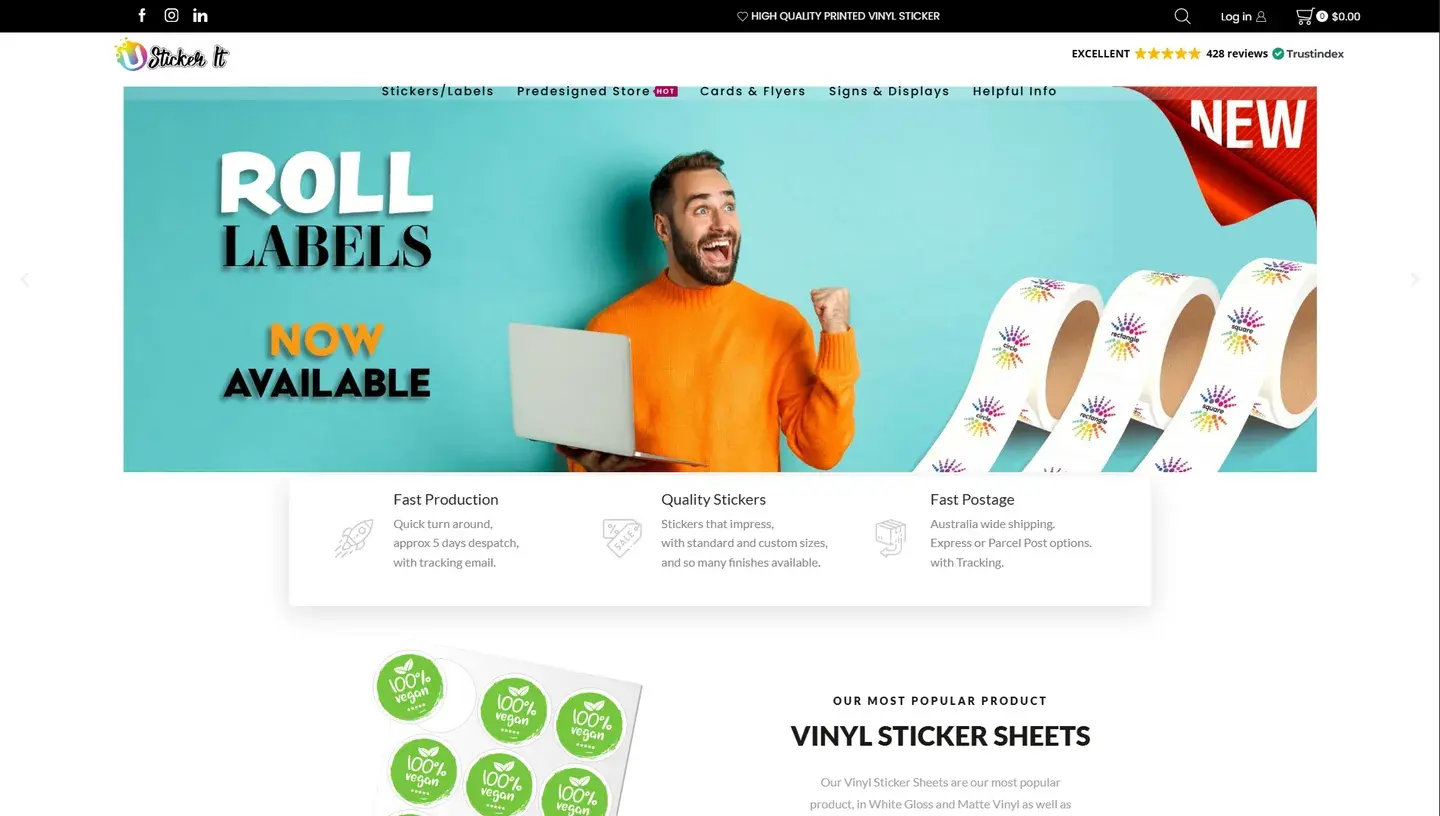
USticker, a family-owned sticker printer in Western Sydney, wanted customers to set background images and colors in its online design tool and to check out faster.
Keep Reading
Netbase JSC built a 3D preview function with product models for its online store.
Keep Reading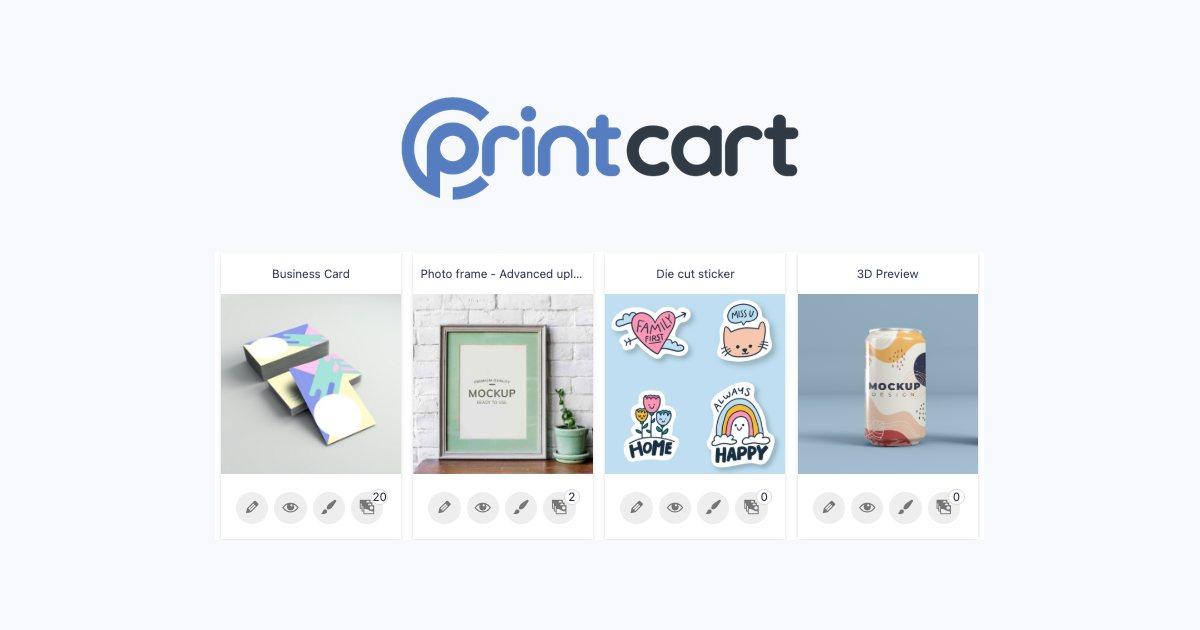
It covers scope, stack and operation; no performance metric is claimed.
Keep ReadingRelated services and solutions
 AI-enabled ecommerce development for merchants who outgrew templates
Netbase provides custom ecommerce development for merchants that have outgrown templates, to turn existing traffic into orders and run operations with less manual work, using AI for search, recommendations and catalog work where it pays. We build on WooCommerce, Magento 2, Laravel and headless stacks; 4over4, whose store gained an AI recommendation engine, reported 82% more revenue within six months.
Learn More
 Web-to-print platform with AI design assistance, from online design to a print-ready order
A web-to-print platform is an online ordering, design and prepress workflow that helps print businesses sell custom products: customers configure, design and approve their order online, AI can suggest layouts and catch artwork problems, and production receives a print-ready file. Netbase has delivered 50+ custom web-to-print platforms across apparel, packaging, signage, promotional merchandise and corporate B2B portals.
Learn More
Discuss a project
Netbase JSC helps organizations design, build, modernize, and operate digital products and AI-enabled business systems.project@netbasejsc.com
+84 937 869 689
91 Nguyen Chi Thanh, Dong Da, Hanoi, Vietnam
Get in touch
Tell us what you want to build, modernize, or operate.