

Scorecard for Evaluating AI Print-Automation Vendors
Score an AI print-automation vendor, feature or in-house build option on five weighted criteria — accuracy and escalation design, data and integration fit, AI governance and vendor terms, production-floor fit, and commercial terms — plus a short list of knock-out rules, instead of comparing feature lists or vendor rankings.
Book a solution review See the related solutionBy Huy Nguyen (David), Founder & CEO · Updated 13 Oct 2026 · 9 min read

This guide is for a print or personalized-product business owner shortlisting an AI vendor for preflight, quoting, design or ordering, and for a platform or operations lead deciding whether to buy an AI print-automation feature or build it into an existing system. It assumes the platform itself is already chosen or being built; the web-to-print platform guide covers that decision, and our e-commerce development team builds the capabilities this scorecard scores.
In this guide
- Why a generic AI-vendor scorecard is not enough
- The five-dimension scorecard
- Worked example: two anonymised scenarios
- How to run the scorecard
- Where AI fits
- What delivery record exists, and what does not
- Alternatives: buy, embed or build
- Limits of this guide
- Frequently asked questions
- Next step
Why a generic AI-vendor scorecard is not enough
General AI-vendor or AI-process-automation scorecards score functionality, pricing, security, integration, support and roadmap on a 1-5 scale. None of the published ones score the dimensions a print buyer actually needs: whether an artwork-preflight tool auto-fixes the right failures and escalates the rest, whether a quoting engine was tested against real historical quotes, whether a generative-design feature keeps output print-ready, or whether a production-routing layer can be overridden by a planner mid-shift. A feature-list comparison or a vendor-published ranking answers "what does it do" and "who else buys it", not "will it fail safely on our artwork, our price book and our production floor". The five-dimension scorecard below is built from the automate/assist/escalate design used across Netbase's own cluster of AI print-capability guides (preflight, quoting, generative design, agent-ready ordering, customer service, production routing and catalog enrichment), not from a vendor's marketing page.
The five-dimension scorecard
Score each candidate 1 (weak) to 5 (strong) per dimension, multiply by the weight, and sum. The weights below assume a production system touching real orders; lower the production-floor-fit weight for a catalog- or marketing-only tool.
| Dimension | Weight | What it scores | Evidence to request |
|---|---|---|---|
| Accuracy and escalation design | 30% | Published or demonstrable accuracy on a representative sample of your own artwork, quotes or orders; a defined boundary between what the system auto-handles, what it flags for review, and what it always escalates to a person | A test run on your own historical data, not a vendor demo set; the exact rule set for the automate/assist/escalate boundary |
| Data and integration fit | 20% | Whether it reads your existing product, pricing, artwork and order data without a parallel data model; connector depth to your storefront, MIS/ERP and payment stack | A data-mapping document naming every field it needs, not just "we integrate with X" |
| AI governance and vendor terms | 20% | Whether the vendor names the model(s) it runs, discloses any use of your data for training, and can describe its own AI management practice | A written answer on data use and a model-agnostic stance you can switch away from (F070, F073) |
| Production-floor fit | 20% | Whether a planner, prepress operator or support agent can override an automated decision in real time, and what happens to in-flight orders if the tool is unavailable | A documented override path and a stated fallback when the AI layer is down |
| Commercial terms | 10% | Contract shape (fixed-scope pilot vs. open-ended subscription), what counts as a pilot pass/fail, and exit/data-portability terms | A written pilot acceptance test tied to your own accuracy and escalation numbers, not the vendor's |
Knock-out rules (any one fails the candidate regardless of score): no override path for a person on a customer-facing or production decision; no answer on whether customer or job data trains the vendor's model; no accuracy test offered on your own data before contract; no stated fallback when the AI layer is unavailable.
Worked example: two anonymised scenarios
| Scenario | Accuracy/escalation (30%) | Data/integration (20%) | AI governance (20%) | Production fit (20%) | Commercial (10%) | Weighted total |
|---|---|---|---|---|---|---|
| A: quoting-only tool, vendor demo set only, no override UI for support staff | 2 | 4 | 3 | 1 | 4 | 2.5 |
| B: platform-embedded AI layer (preflight + quoting), tested on the buyer's own six-month order history, named model vendor, planner override built in | 4 | 5 | 4 | 4 | 3 | 4.0 |
Scenario A fails the knock-out rule on production-floor override before the weighted score even matters; Scenario B clears every knock-out rule and scores higher on the dimensions that carry the most weight. The total is a ranking aid, not a guarantee: a 4.0 candidate still needs its own pilot against the buyer's data (see Limits below).
How to run the scorecard
-
List every candidate
Named vendors, a platform's built-in AI module, and "build it ourselves" as one of the rows.
-
Pull your own sample
A set of your own artwork, quotes, orders or catalog records (whichever the capability touches), and ask every candidate to run against it, not their demo set.
-
Score against evidence, not claims
Rate each candidate on the five dimensions using the evidence column, not the vendor's own marketing.
-
Apply the knock-out rules first
Drop any candidate that fails one before totalling weights.
-
Shortlist and pilot
Total the weighted score for the candidates that remain and shortlist the top two for a paid or time-boxed pilot with a written pass/fail test tied to your own accuracy and escalation numbers.
-
Re-run at renewal
A vendor's model, pricing or data-use terms can change after launch, so score it again before you renew.
Where AI fits
The accuracy and escalation dimension exists because an AI print-automation feature is only as good as the automate/assist/escalate boundary behind it; see the capability-specific guides for artwork preflight, instant quoting, generative design editing, agent-ready ordering through MCP, AI customer service for print orders, production routing and scheduling and catalog enrichment for the specific rules each one needs. The AI-governance dimension follows Netbase's own practice: Netbase works with the major commercial and open-source AI models and tools, chosen per project, rather than one vendor's stack (F070).
-
In delivered work
Product recommendation engine
Built for 4over4's online printing store from browsing and purchase history; it is the one delivered, named AI feature a vendor comparison on this page can point to.
-
Available capability
AI-assisted vendor-fit scoring
Scoring a candidate's accuracy sample, integration fit and governance answers against the five dimensions above is a machine learning and generative AI feature; not yet tied to a published vendor-evaluation case.
What delivery record exists, and what does not
Netbase has delivered 50+ custom web-to-print platforms (F014) and built the personalization and AI-adjacent editor features this scorecard's capability guides describe: a remove-background tool and a 30-plus-style cartoon filter for an unnamed print client (F141), a 3D product preview and a background-image picker for named clients Rebelo AG and USticker (F149), and 4over4's recommendation engine, the one delivered AI feature tied to a named client, which contributed to its measured production-time and template-count results (F028, F031). 4over4's Illustrator-to-SVG conversion is file automation, not artificial intelligence, and is not used as an example of a scored capability here (F028, F149). Netbase's own SOC 2 Type II attestation and ISO 27001 certification (F022, F051, F052) are listed only as the kind of evidence to request from a vendor, not as a standing Netbase extends to a third party. What does not exist: a published Netbase record of running this five-dimension scorecard against a named external AI print-automation vendor, and no accuracy percentage, pilot duration or vendor price is published anywhere on this page.
Alternatives: buy, embed or build
| Option | Strength | Risk | Choose it when |
|---|---|---|---|
| Buy a point vendor for one capability (e.g. a standalone preflight or quoting tool) | Fast to pilot; narrow scope keeps the knock-out test manageable | Another data model and login to maintain; integration cost can exceed the subscription | You need one capability quickly and your platform has an open integration point |
| Use a platform's built-in AI module | One data model; vendor already has your product and order data | Harder to swap if governance or accuracy falls short later; feature pace tied to the platform roadmap | Your platform already ships the capability and the scorecard clears it |
| Build the capability into your own platform | Full control of the automate/assist/escalate rules and the override path | Needs engineering capacity and your own accuracy-testing discipline | The capability is core to your margin or customer experience and no vendor clears the knock-out rules |
This decision is the one our web-to-print solution work and the platform-model comparison (hosted, plugin or API-first) sit next to: the scorecard decides which AI capability to buy, embed or build; the platform-model guide decides how the platform itself is hosted and integrated.
Limits of this guide
- The scorecard ranks candidates relative to each other; it does not replace a pilot run on the buyer's own data, and a high score is not a guarantee of production performance.
- Weights are a starting point for a production system touching real orders; a catalog- or marketing-only use lowers the production-floor-fit weight and raises data/integration fit.
- No accuracy percentage, pilot duration, price or vendor ranking is published on this page; every number a buyer uses in their own scorecard run comes from their own pilot, not from this guide.
- This guide does not cover generic enterprise AI-vendor governance (data residency, model bias audits at scale); see a general AI-governance framework for that, and apply the print-specific dimensions above on top of it.
Plan the next step with a Netbase consultant
Frequently asked questions
Yes. Score both candidates on the same five dimensions and weights; a built-in module still needs its own accuracy test on your data and its own answer on data use, even though it shares your login and data model.
Treat it as a knock-out signal, not a missing data point: a vendor confident in its accuracy has a process for testing against a buyer's sample under an NDA; a refusal usually means the demo-set numbers will not hold.
No. The worked example's Scenario B score of 4.0 is a shortlisting signal, not a launch decision; run the pilot pass/fail test from the commercial-terms dimension before any production rollout.
Next step
Score your shortlist against the five dimensions above, then book a solution review to pressure-test the result against our web-to-print delivery experience.
Work behind this guide
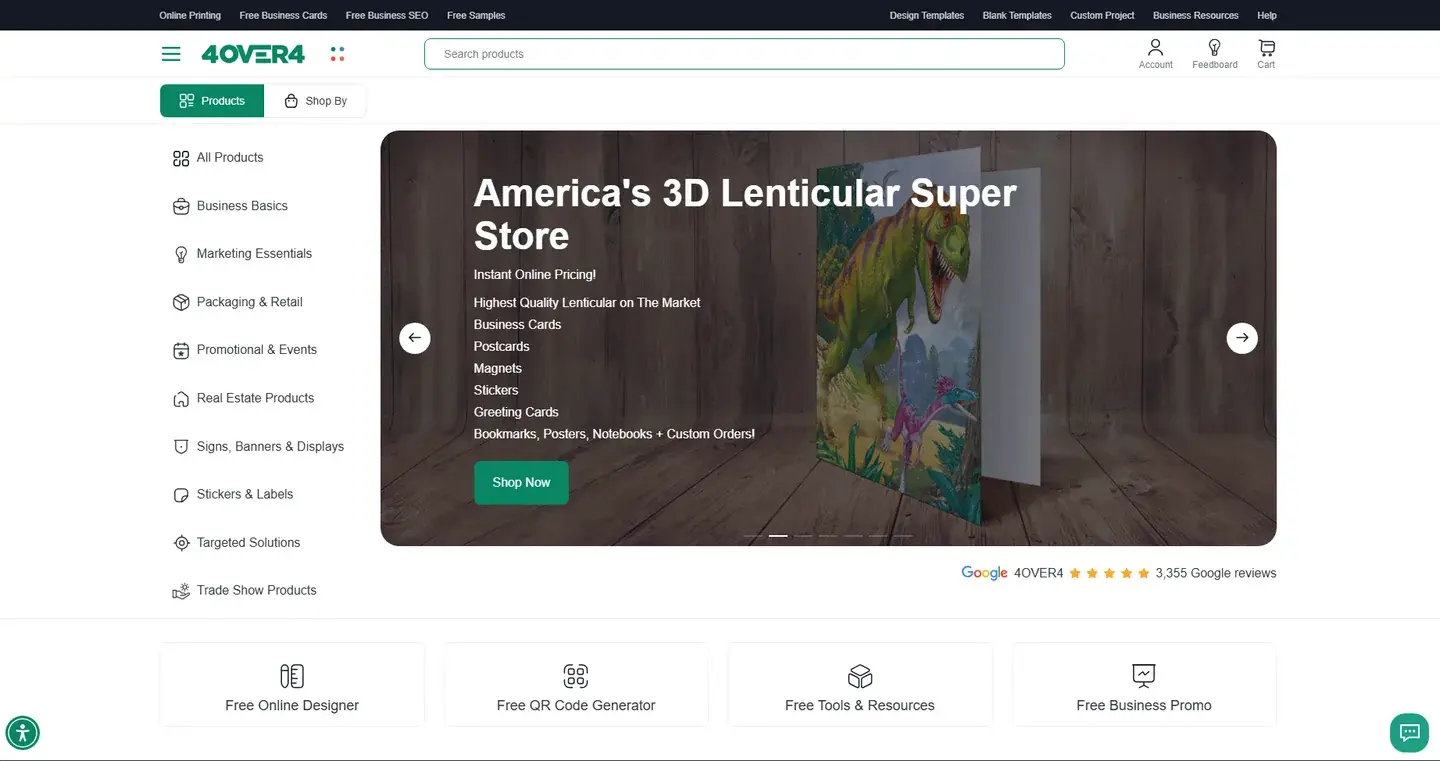
Netbase JSC reworked checkout, search and navigation, automated Adobe Illustrator (.ai) to SVG file conversion and added recommendations.
Keep Reading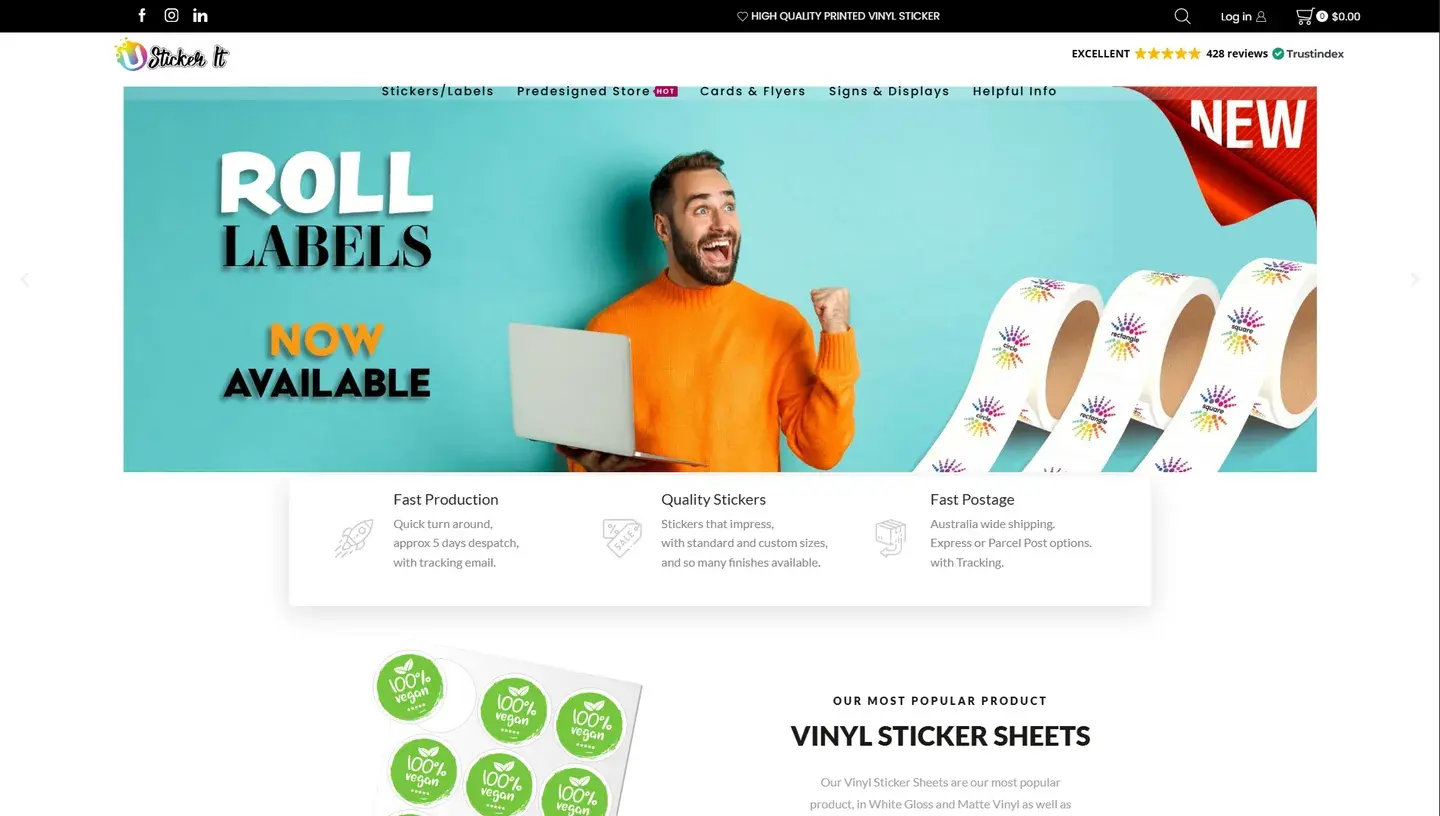
Netbase JSC built the feature and integrated a secure payment gateway.
Keep ReadingRelated services and solutions
 AI-enabled ecommerce development for merchants who outgrew templates
Netbase provides custom ecommerce development for merchants that have outgrown templates, to turn existing traffic into orders and run operations with less manual work, using AI for search, recommendations and catalog work where it pays. We build on WooCommerce, Magento 2, Laravel and headless stacks; 4over4, whose store gained an AI recommendation engine, reported 82% more revenue within six months.
Learn More
 Web-to-print platform with AI design assistance, from online design to a print-ready order
A web-to-print platform is an online ordering, design and prepress workflow that helps print businesses sell custom products: customers configure, design and approve their order online, AI can suggest layouts and catch artwork problems, and production receives a print-ready file. Netbase has delivered 50+ custom web-to-print platforms across apparel, packaging, signage, promotional merchandise and corporate B2B portals.
Learn More
Discuss a project
Netbase JSC helps organizations design, build, modernize, and operate digital products and AI-enabled business systems.project@netbasejsc.com
+84 937 869 689
91 Nguyen Chi Thanh, Dong Da, Hanoi, Vietnam
Get in touch
Tell us what you want to build, modernize, or operate.